Source: Ally. 8 February 2017. “Hattie ‘The Tree Lady of Brooklyn’ Carthan.” Brooklyn Public Library. Available at: https://www.bklynlibrary.org/blog/2017/02/08/hattie-tree-lady-brooklyn.
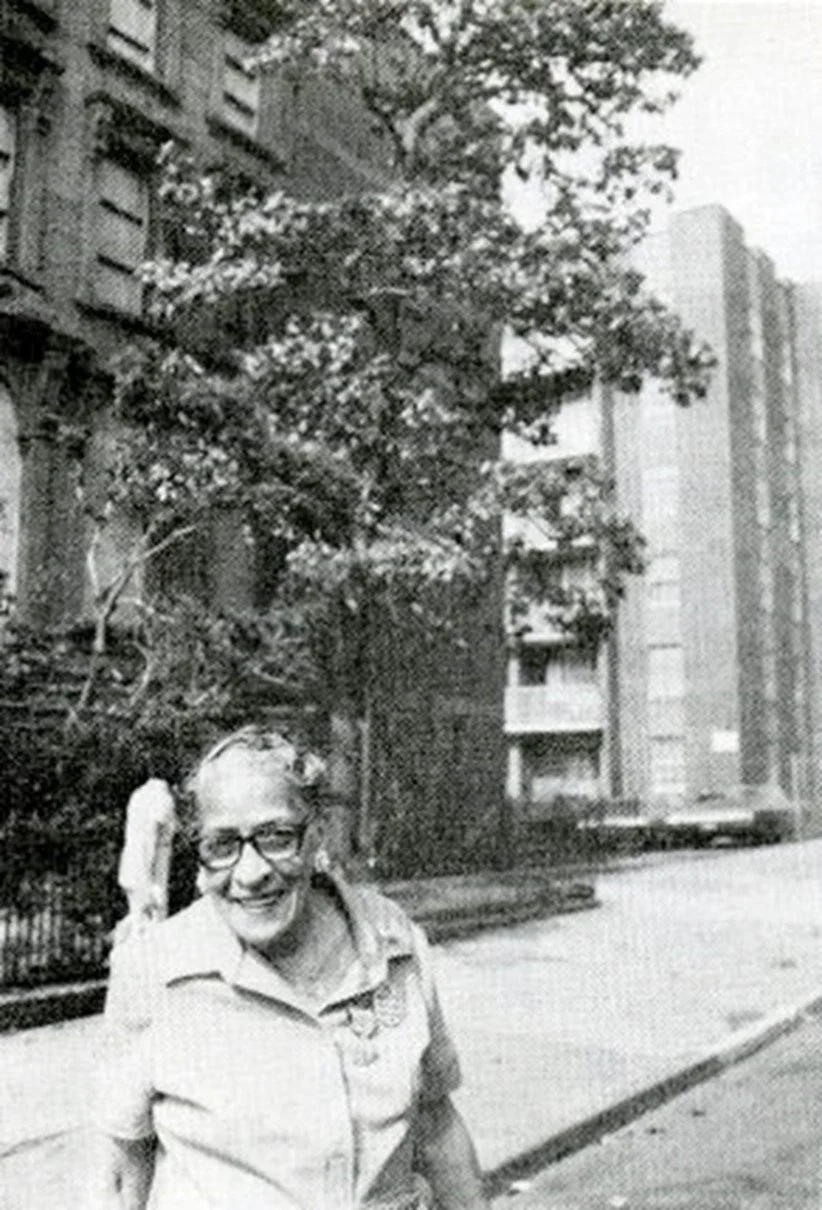
African American environmental activist Hattie Carthan was 64 years old when she launched a grassroots campaign in the Bedford-Stuyvesant neighborhood of Brooklyn. Her formerly tree-lined block had experienced a significant loss in tree canopy over time, which according to the Brooklyn Botanic Garden was likely due to “the combination of natural stand decline and municipal disinterest in replacing street trees in a redlined neighborhood.” In 1964, Carthan sent postcards to every house on the block to arrange a meeting, and seven people attended, forming the T&T (Tompkins and Throop Avenues) Block Association. A neighborhood barbecue raised funds for tree replacement resulting in four new trees on the block. Mayor of New York City John Lindsay attended the next barbecue at the T&T Block Association’s invitation, and the NYC Parks Department soon offered help in the form of six additional trees for every four planted—the origins of New York City’s 60-year-old tree matching program.
Carthan went on to become chair of the Bedford-Stuyvesant Beautification Committee, a coalition of more than 100 neighborhood block associations that would eventually plant over 1,500 trees in Brooklyn. She also founded the Neighborhood Tree Corps with a New York State Council on the Arts grant, teaching youth about tree care and urban horticulture, and the Magnolia Tree Earth Center of Bedford-Stuyvesant, which bought three brownstone apartment buildings to protect the magnolia tree growing in front of them from urban development. That magnolia still stands today, and when Carthan died in 1984, the Brooklyn Botanic Garden introduced a new magnolia hybrid in her honor—Magnolia × brooklynensis ‘Hattie Carthan’—a testament to a legacy of stewardship that extends beyond both her neighborhood and her lifetime.