• Home
  • About
    • Mission and Funding
    • Our People
    • Areas of Expertise
    • 990 Filings
    • Governance and Disclosure Statements
  • Our Work
    • Publications
    • Testimonials
  • Jobs
    • Internships
    • AEC Fellowship
    • Careers
  • Pro Bono Fund
    • Pro Bono Fund
    • Donate
    • MassCEC Empower Grant
  • Resources
    • Upcoming Seminars
    • Seminar Archive
    • Maps Archive
    • Equity Resources
    • Newsletters
    • Blog
Applied Economics Clinic
  • Home
  • About
    • Mission and Funding
    • Our People
    • Areas of Expertise
    • 990 Filings
    • Governance and Disclosure Statements
  • Our Work
    • Publications
    • Testimonials
  • Jobs
    • Internships
    • AEC Fellowship
    • Careers
  • Pro Bono Fund
    • Pro Bono Fund
    • Donate
    • MassCEC Empower Grant
  • Resources
    • Upcoming Seminars
    • Seminar Archive
    • Maps Archive
    • Equity Resources
    • Newsletters
    • Blog

Risks of New Gas-Fired Plants in Southeastern States

Client: Southern Environmental Law Center (SELC)

Authors:
Tanya Stasio, PhD, Joshua R. Castigliego, and Elisabeth Seliga

June 2026

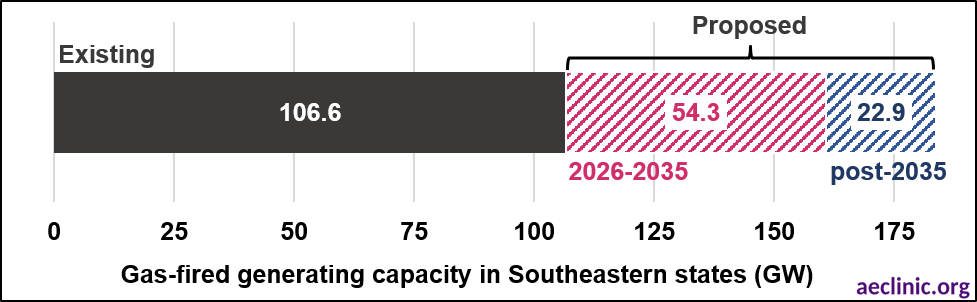
Across the Southeastern United States, rising electric demand and ongoing reliability challenges are prompting utilities to propose new gas-fired resources to help meet future system needs. At the same time, regulators are looking for solutions to provide greater energy affordability in the face of high electricity and fuel costs. Major investments in gas-fired power plants, pipelines, and related facilities put customers at risk for increasing electric rates and energy bills. This Applied Economics Clinic (AEC) report, prepared on behalf of Southern Environmental Law Center (SELC), identifies eight risks to electric utility customers that could cause higher energy rates and bills:

  1. Growing cost of gas-fired power plants

  2. Supply chain constraints

  3. Volatile and uncertain gas fuel prices

  4. Lack of resource diversity

  5. Dependence on out-of-state gas supply

  6. Stranded assets due to uncertain forecasts

  7. Stranded assets due to more stringent climate policy

  8. Stranded assets from existing or more stringent environmental regulations

To ensure that customers’ electric bills remain affordable, while also considering how states will adapt to the region’s anticipated growth in electric demand, policymakers, regulators, and utilities must assess whether pursuing additional gas-fired resources would expose ratepayers to unnecessary risk.

Link to Report

Return to Our Work

tags: Tanya-Stasio, Elisabeth Seliga, Joshua-Castigliego, Energy price hedging and investor risk assessment, Gas system infrastructure impacts and costs, Geographic data mapping, Energy affordability
Wednesday 06.10.26
Posted by Liz Stanton