• Home
  • About
    • Our People
    • Mission and Funding
    • 990 Filings
    • Governance and Disclosure Statements
  • Our Work
    • Publications
    • Newsletters
    • Equity Resources
  • Blog
  • Jobs
    • Internships
    • AEC Fellowship
    • Careers
  • Pro Bono Fund
    • Pro Bono Fund
    • Donate
    • MassCEC Empower Grant
Applied Economics Clinic
  • Home
  • About
    • Our People
    • Mission and Funding
    • 990 Filings
    • Governance and Disclosure Statements
  • Our Work
    • Publications
    • Newsletters
    • Equity Resources
  • Blog
  • Jobs
    • Internships
    • AEC Fellowship
    • Careers
  • Pro Bono Fund
    • Pro Bono Fund
    • Donate
    • MassCEC Empower Grant

Climate Models and Full Employment

As climate change increasingly becomes part of the public consciousness, so too do debates about the cost of reducing greenhouse gas emissions. Economists run models to determine the social cost of carbon, which represents the economic damage caused by an additional ton of carbon dioxide emissions. For example, if the social cost of carbon is $30 per ton of carbon dioxide emissions, society should be willing to spend that much money to not emit an additional ton and avoid those damages

But this type of analysis has a major limitation. Climate economic models typically use an assumption called “full employment”: every dollar spent on investments to combat climate change takes a dollar away from spending on other priorities, like consumption. This is made explicit in the climate models that inform the U.S. government’s estimates of the social cost of carbon, including the DICE model by William Nordhaus.  
chirag.jpeg

The assumption of a hard tradeoff between investment and present-day consumption is a long-standing feature of many macroeconomic models. ”Full employment” assumes that all workers are employed, and all factories are running at full capacity. But we know from recent experience that full employment of the labor force, factories, and other workplaces is not a given in the United States and around the world. Following the Great Recession of 2007-2009, U.S. unemployment exploded and stayed at elevated levels for nearly a decade. During the COVID-19 pandemic, unemployment skyrocketed to unprecedented levels. Workers who were ready and able to work—remotely or in-person—could not find jobs and many dropped out of the labor force entirely. Women’s labor force participation plummeted during the pandemic. The prime-age employment to population ratio, a measure of labor market health, has never returned to the high (i.e. healthy) levels last seen in 2000. the economy can go and has gone for decades without ever hitting full employment.

To make matters worse, under conditions of high unemployment businesses will forgo crucial investments when they lose confidence that consumers will be able to buy their products. When this happens, additional public investment spending on renewable generation Isn’t the tradeoff imagined in climate economics models: either green investment or consumer spending. Instead, the green investment gives jobs to workers that might otherwise lack them (and these workers have money to spend at other businesses), brings idle capacity online, and incents the private sector to increase its own investments in renewables, energy storage, and efficiency measures.

The climate models calculating the U.S. government’s social cost of carbon understand climate investment to be a bad thing, a sacrifice that hurts people’s standard of living. In an economy like ours that has plenty of room to grow, climate investment is a promising source of jobs, technological change, and revitalized communities. Governments should incorporate that understanding when they calculate the SCC and recognize that failing to act means depriving the economy of economic growth. That is a cost of climate inaction too.

Chirag Lala Research Assistant


This is a part of the AEC Blog series

tags: Chirag Lala
Tuesday 06.15.21
Posted by Guest User
 

The Dirty Truth: Green Washing

Earlier this year, Sierra Club released ‘The Dirty Truth About Utility Climate Pledge’, describing many utility climate pledges as ‘greenwashing’ after analyzing 50 companies’ plans to retire coal, stop constructing new gas plants, and build new clean energy. According to the Sierra Club, most of these climate plans were designed to mollify the public instead of reducing carbon emissions. 

Greenwashing’s aim is to make people believe that the company is doing more to protect the environment than it really is. The term ‘greenwashing’ was initially coined in 1986 by environmentalist Jay Westervel who argued that the hotel industry promoted reusing towels as an eco-friendly strategy when, in fact, it was a cost-saving measure. As more consumers become environmentally conscious, greenwashing is becoming a widespread phenomenon across many industries.

Image Source: Sierra Club, The Dirty Truth About Utility Climate Pledges

Image Source: Sierra Club, The Dirty Truth About Utility Climate Pledges

In the financial sector, green bonds and green funds are issued by companies claiming to be eco-friendly. For example, ESG (Environmental, Social, and Governance) funds are portfolios investing in companies that aim to have eco-friendly, sustainable, and social impacts in the world. However, six of the 20 largest ESG funds have invested in ExxonMobil, the largest U.S. oil firm. Two of these funds own stakes in Aramco (a Saudi Arabian oil company) and one holds shares in a Chinese coal-mining company. ESG funds, marketed as investing in sustainability and the environment, have substantial investments in fossil fuels and other business interests with negative environmental impacts.

In April, New York City filed a lawsuit against Exxon, BP, Shell, and the American Petroleum Institute for attempting to influence customers to think their companies’ actions are not harmful to the environment when they have actually worsened the climate crisis. The lawsuit states that one Shell online campaign describing the company as using cleaner energy solutions is defrauding because it doesn’t mention the company’s main business, fossil fuel extraction, and development.

Greenwashing is also a prevalent practice in the food and farming industry. PETA helped consumers to file a lawsuit in federal court against Vital Farms, a leading seller of pasture-raised eggs and poultry. Consumers suing the farm state that, “Vital Farms is no different from factory poultry except that the chickens are fed grass instead of feed. Male chicks are slaughtered and hens are debeaked for egg production.” According to PETA, Vital Farms is deceiving consumers and investors while selling its products at a much higher price than regular eggs.

Sierra Club’s “Dirty Truth” report suggests three ways to reach meaningful climate goals: (1) be legally binding; (2) apply to all subsidiary companies; and (3) include a short-term target by 2030. Last year the EU prepared a draft taxonomy that defines and distinguishes environmentally sustainable economic activities. The taxonomy, so-called ‘Delegated Act’ can help to prevent greenwashing by classifying and labeling environmentally sustainable economic activities by industry. These definitions are expected to apply to EU companies starting in 2022.

In the United States, federal regulation of greenwashing is currently achieved in two ways: Regulating deceptive advertising through Section 5 of the FTCA (Federal Trade Commission Act); and private lawsuits enforcing the Lanham Act. The Biden administration is working on new measures to reduce and control greenwashing, such as creating new climate change units at Treasury Department, Federal Reserve, and the Securities and Exchange Commission.

Despite these legislative efforts to stop greenwashing, businesses’ desire for shortcuts and loopholes will persist. Companies that turn away from the truth and choose greenwashing, however, risk negative publicity and potential lawsuits when their actions are discovered.

그림1.jpg

Jimin Kim Communications Assistant


This is a part of the AEC Blog series

tags: Jimin Kim
Thursday 06.10.21
Posted by Guest User
 

The New Hybrid Office: AEC’s Experience

With COVID restriction for offices largely lifted in Massachusetts, very low local and state-wide transmission rates, and very high vaccination rates, AEC is back in the office this week! The topic of how and why to operate a hybrid (work-from-home/work-in-the-office) workplace is a little far afield from AEC’s usual blog topics but is on our minds as members of our larger non-profit/consulting/energy/environment/EJ/equity community figure out how to transition back to something like normalcy after more than a year of working at home. So here are our thoughts and we’d love to hear yours:

Please chime in on Twitter, Facebook, and/or LinkedIn.

amy-hirschi-szrJ3wjzOMg-unsplash.jpg

What we’ve been doing since March 2020: AEC’s office in Arlington MA closed on March 13, 2020. Since then, everyone has been working from home. A few people have been using the office (separately) a few days a week, just to get out of the house. During this time, we gained some new team practices and systems:

  • A Slack communication system for texting among staff members. We use this all the time, including to: check in when starting work in the morning, make quick requests and ask questions, chat with someone one-on-one, and chat with a specific project team.

  • Holding a morning Zoom call every weekday at 10 am. Everyone who is working that day (and can join) joins. There’s a little chit chat about who’s left the house recently, top news stories, etc., and then we check in about who needs tasks to do and who has tasks that need doing.

  • Including the entire staff (instead of just the more senior “professional” staff) in our weekly planning meetings. The research assistants have been a great addition to the meeting!

  • And, of course, we’ve been doing video conference calls with clients and colleagues. Lots and lots of video calls!

What’s our new plan starting this week: AEC’s offices reopened today on a hybrid plan. We're working to create a hybrid workplace to both (1) support staff’s need for flexibility to get quiet, focused time and also take care of family responsibilities and (2) recognize the value of face-to-face communication in our collaboration, teaching, and mentoring. Here's our plan as it currently stands:

  •  Staff needs to be fully vaccinated to work in the office.

  • Anyone who is feeling sick, feels like they might get sick, or has a household member who’s feeling sick needs to work from home. No exceptions! We’re prioritizing keeping one another healthy and have added a hand-sanitizing station at the front door and re-fillable bottles on every desk. Staff are not required to wear masks, but visitors (who are very infrequent) are.

  • Each week will have: one “Office Day” where everyone comes into the office for staff meetings and trainings; one “Remote Day” where everyone works from home and inter-staff communications is kept at a lower level; and three “Choice Days” where staff can either come to the office or stay home (but everyone is asked to try to come in a least two days when possible).

  • We’re keeping our Slack channels, our morning meeting (including at home and in office participants, inviting the full staff to weekly staff meetings, and the practice of video conferencing with clients and colleagues often.

What’s your organization’s plan? We’d love to hear about it and share ideas about what works and what doesn’t. Send us a note! And good luck with the post-COVID transition!

Dr. Liz Stanton Director and Senior Economist


This is a part of the AEC Blog series

Tuesday 06.08.21
Posted by Liz Stanton
 

Royal Dutch Shell Ordered to Cut Emissions

Royal Dutch Shell, a global oil company based in Europe, is one of the most profitable and largest companies in the world. In early February 2021, Royal Dutch Shell announced an update to its net-zero emissions strategy, breaking down key goals and facts about the company, including that the Company’s total carbon emissions had peaked in 2018, along with oil production peaking in 2019. The net-zero emissions goal was announced in 2020, with a goal of achieving a 45 percent reduction by 2035 and carbon neutrality by 2050. The February update provided incremental targets to 2050, using 2016 as a base year. Other components to the update included increasing carbon, capture, and storage capacity and increasing carbon offsets, a measure our blog series has covered before.

shell.png

In 2018, thousands of Dutch citizens, along with seven environmental and human rights organizations filed a case asking the Hague District Court to order Royal Dutch Shell to cut emissions in line the Paris Climate Agreement; Shell is responsible for about 1 percent of annual global emissions and invests heavily in oil and gas. Last week, the Court ordered that Royal Dutch Shell cut its net carbon emissions by 45 percent by 2030, compared to 2019 levels. The decision followed after the Court determined that Royal Dutch Shell’s current emission reduction plans were not sufficient; the ruling greatly speeds up Royal Dutch Shell’s public goals and makes them more concrete and actionable.

Not only did the ruling speed up the timeline for the company’s emissions reduction goal by 5 years, but it also changed the baseline year to 2019, likely requiring larger reductions than the original 2016 baseline.

The Court did not order any explicit steps towards achieve this goal, allowing Royal Dutch Shell freedom in planning its shifted pathway. Without rules to guide the Company in reaching the new goal, it is possible Royal Dutch Shell may exploit loopholes in the ruling. Despite this flexibility, Royal Dutch Shell noted its disappointment and intent to appeal the decision in a media announcement on the day of the ruling.

All in all, this unprecedented ruling sets the stage for future legal action against major polluters.

Tanya Stasio Research Assistant

myishaphoto.jpeg

Myisha Majumder
Research Assistant


This is a part of the AEC Blog series

tags: Tanya Stasio, Myisha Majumder
Thursday 06.03.21
Posted by Guest User
 

Carbon Border Adjustments

The Biden Administration raised concerns in March about a key plank in the European Union’s proposed climate policy: a border carbon adjustment(BCA). BCAsimpose fees on imported goods and rebates on exports to account for differences in carbon tax rates (or carbon prices) between countries. The goal of the adjustments is to prevent “leakage”—a carbon tax in one country from forcing its consumers to shift their purchases to buy products from a country without a carbon tax. Leakage also occurs when companies move production abroad to dodge carbon taxes at homeThe hope is that the EU’s BCA will increase the price of trading partner’s wares enough to incent them to implement tougher climate policies, all while increasing the political support of carbon taxes among manufacturers, labor unions, and industrial regions.

And the BCA approach seems like it could work to reduce emissions. An analysis of various BCA studies found that unilateral climate policies lose 5 to 25 percent of their promised emissions reductions without a BCA. The same study found that a BCA could reduce that leakage by 6 percent. Considering these figures, it is not surprising why the EU is considering a BCA. They already have a price on carbon dioxide through their emissions trading scheme that has been climbing steadily this year and stands above $61 euros per ton of carbon dioxide as I write.

chirag.jpeg

On the other hand, the United States does not have a national carbon tax or emissions trading scheme. U.S. Climate Envoy, John Kerry described BCAs as a “last resort” while emphasizing that countries should pursue other cooperative forms of emissions reduction. He is right that the BCA is no substitute for policies that help companies reduce emissions in the manufacturing process. But his reasoning for opposing Europe’s BCA misses the point. Rather than complain about the EU’s adjustment and treat it like a hostile tariff against American products, the United States should set a comparable carbon tax and BCA of its own and negate the impact of foreign BCAs on our own exports.

The Energy Innovation and Climate Dividend Act, whose dividend I wrote about in a previous blog post, already includes a border adjustment. The Biden Administration is also trying to create a global minimum corporate tax rate to combat tax evasion. Passing a domestic carbon tax and including a BCA would apply the same principle to countries shirking their climate responsibilities. It would extend two basic features of a carbon tax–increasing the price of dirty energy and reversing the subsidies given by governments to fossil fuel industries–beyond isolated domestic markets.

Chirag Lala Research Assistant


This is a part of the AEC Blog series

tags: Chirag Lala
Tuesday 06.01.21
Posted by Guest User
 

The Misuse of Carbon Offsets: The Mass Audubon Example

For governments and organizations, carbon offsets play an important role in achieving emission reduction targets. Offsets are an “additional” climate benefit – preserving a forest that would have been cut down, planting trees, or investing in renewable energy projects – that “offsets” the emissions from polluting activities.

In theory, the use of carbon offsets allows some flexibility in emissions reduction that is essential to achieving climate goals but in practice, some organizations are taking advantage of the system and ultimately creating more emissions in the process.

In 2015, the Massachusetts Audubon Society, a conservation nonprofit that manages preserved forests in western Massachusetts, applied to participate in California’s forest offset program and claim carbon credits for conserving forest. As part of their application, they noted that they could log almost 10,000 acres of forest but will opt for preservation in exchange for carbon credits. As a result, the organization was awarded over half a million carbon credits, earning them about $6 million from oil and gas companies who bought their credits.

The issue with this transaction is the premise that buying carbon credits from Massachusetts Audubon Society preventing logging of its trees, in other words, these trees would have been cut down were it not for participation in the program. Given that the Society is a conservation organization, and not a timber company, it is unlikely that the land was destined for intense logging. Ergo, no emissions were actually prevented and instead, more emissions were allowed by selling of these carbon credits to fossil fuel companies who substitute the credits for their out actions to reduce climate change. The flaw is in the design; the California offset program creates the incentive to claim offset benefits for forests that are not under threat for logging.

tanya1.jpg

This is just one example of the potential misuse of carbon offsets. In a study of California’s carbon offsets program, researchers found that--because forests for which credits were awarded were never under threat of logging--30 million tons of carbon dioxide equivalent credits, worth over $400 million, were awarded in excess of emissions prevented. Again, this is a flaw in the design of the program; regulators calculate the regional average of carbon storage and landowners of forests with a higher carbon storage can earn credits for the difference.

Without rules to ensure that carbon saving actions are performed because of the carbon credits – a concept called ‘additionality’ – carbon offset programs can unintentionally cause a net increase in emissions. Program developers and policymakers do well to keep these potential “loopholes” in mind when designing programs. Without careful design, carbon offsets are vulnerable to misuse.

Tanya Stasio Research Assistant


This is a part of the AEC Blog series

tags: Tanya Stasio
Thursday 05.27.21
Posted by Guest User
 

Boston Launches Community Choice Energy

Community Choice Energy programs (sometimes called Community Choice Electricity or Aggregation) enable local governments to bargain for and purchase electricity on behalf of their community members, like residents and businesses. A major benefit of Community Choice Energy (CCE) is a reduced per kilowatt-hour rate for the consumer, in addition to the potential for increased reliance on renewable energy, which can substantially reduce emissions. AEC has written multiple policy briefs about implementing CCE in Massachusetts, particularly in the City of Boston.

The Commonwealth of Massachusetts authorized municipal governments to implement CCE in 1997, and Boston authorized its own CCE program on October 6, 2017. After three years of deliberations, the City announced the implementation of the program, starting February 1, 2021.

Eversource customers in the City were automatically enrolled in the CCE program on February 1, 2021, but were given the option to opt-out beforehand. In order to increase accessibility, customers can switch between three different plans whenever they want, or opt-out of CCE all together, with no fee or penalty.

myisha.jpg

The three plans are Standard, Optional Basic, and Optional Green 100. The cheapest option is Optional Basic, at approximately $0.109/kWh, and with 18percent renewable electricity. Next is Standard, which is the default package, and is approximately $0.114/kWh, but with 28percent renewable electricity. Lastly, Optional Green 100 is the most expensive, at roughly $0.148/kWh, and 100percent renewable electricity. In comparison, Eversource’s Basic rate for 2021 is $0.119/kWh, and 18 percent renewable energy. Both the Optional Basic and the Standard plans offer cheaper electricity than the Basic rate, with the Standard plan offering more renewable energy.

A local news investigation into Boston’s CCE has shown that little over five percent of Eversource customers opted out of the CCE program. Within the program, almost all customers stay with the Standard, or default, plan. Less than one percent are in both the Optional Basic and the Optional Green plans.

The City has also put equity at the front in its CCE program implementation. In order to educate the community, Boston offered written notices in multiple languages, a more discounted rate for 20,000 low-income residents, and 11 virtual webinars over the course of a few weeks. The City of Boston has implemented a CCE program that is the largest of its kind in the New England area, offering cheaper costs to consumers, and emphasizing equity and accessibility.

Myisha Majumder Research Assistant


This is a part of the AEC Blog series

Tuesday 05.25.21
Posted by Guest User
 

Are Carbon Taxes Enough?

In a previous post, I discussed how cash transfers paid from carbon tax revenues (called “tax and dividend”) would be a net benefit to low- and middle-income households. However, the good achieved by a carbon tax is is sometimes questions, especially if most of the revenue is sent back to households as a dividend rather than invested in new renewables and efficiency measures.  

In addition to redistributing income to poorer households, a carbon tax and dividend policy plays two key roles in decarbonization. First, a carbon tax provides an incentive for emissions reductions by making dirtier energy sources more expensive. That way, individuals and businesses will want to purchase cleaner energy and more energy efficient products. Columbia University’s Center on Global Energy Policy estimated that starting with a $15/ton tax and increasing it by $10/ton each year could reduce emissions by 36-38 percent of 2005 levels by 2050. Achieving further greenhouse gas reductions will require governments to act. Businesses will need government to reduce the riskiness of green investment, provide money for researching and developing green technologies, and provide direct investment in the riskiest ventures. This is the same approach the U.S. government used to support the development of the internet and GPS from their invention into enormous retail markets. Without similar government assistance, a carbon tax would still increase the price of dirty energy but without a lending a helping hand to make green energy less expensive and more accessible.

Alaskan_Way_Viaduct_Traffic_(17903326752).jpg

A carbon tax also advances decarbonization by reducing direct and indirect subsidies to fossil fuel producers. The International Monetary Fund estimates that these subsidies added up to $5.2 trillion in 2017. Direct subsidies reflect the difference between what we actually pay for fossil fuels and the full cost of fossil fuels, including environmental damages. A carbon tax increases the price of dirty energy, narrowing or even erasing this gap. But fossil fuel production is also indirectly subsidized when housing, land-use, and transportation decisions enable the use of more fossil fuels. For instance, outright bans on dense multifamily housing in suburban neighborhoods, parking requirements in city centers, and a lack of reliable public transit increase automobile use and congestion during daily commutes.  Zoning and transit policies that indirectly subsidize fossil fuel consumption, however, are difficult to change quickly; they are politically contentious, overseen by thousands of local governments, and often take years to go into effect. Some countries, states or cities will embrace greener, denser, transit-oriented development faster than others. A carbon tax ensures that the costs of transition fall on those areas that move more slowly, and therefore emit more carbon dioxide. For communities that fail to pursue denser development, the tax will at least incentivize electric vehicles, public transportation, rooftop solar generation, and efficient appliances. Remitting its revenue via a dividend would compensate low- and middle-income households in those areas, while freeing them up to purchase greener goods and services on their own initiative.

A carbon tax is no substitute for the hard political fights necessary to build cleaner generation, decommission dirty fuel sources, and ensure a just transition for marginalized communities and workers in fossil fuel industries. Those efforts will not automatically happen simply by putting a price on carbon emissions. But those fights will be made easier if a tax and dividend is passed. And with the time limit we face, that’s no small thing.

Chirag Lala Research Assistant


This is a part of the AEC Blog series

Thursday 05.20.21
Posted by Guest User
 

The Net Zero Debate

Net Zero targets promise to reduce greenhouse gas emissions as much as possible and “offset” the remainder in one of two ways: first, paying someone else, somewhere else, to reduce emissions on your behalf; second, by storing carbon in “carbon sinks”—for example, by planting trees or restoring wetlands—that reduce carbon dioxide concentrations in the atmosphere.

Countries, cities, and companies from around the world have set Net Zero targets for years between 2040 and 2050. President Biden announced that the United States aims to reach Net Zero by 2050, the same target set by Massachusetts, California, New York, Hawaii, and the District of Columbia. Since it is not possible to reduce global emissions to zero with today’s technology, Net Zero targets provide wiggle room to meet some portion of emission reduction targets with carbon offsets: outsourcing emission reductions to other states or countries.

The Net Zero debate centers around one question: What “counts” as an offset? Ultimately, carbon offsets are only truly beneficial for the climate when they are:

  • Real—carbon sequestration has actually occurred;

  • Verified—carbon sinks are recorded, monitored and tracked by a reputable, impartial entity;

  • Permanent—carbon that is sequestered does not get re-released into the atmosphere later (for example, if you plant a tree, it should not be later cut down); and

  • Additional—carbon being sequestered would not have been stored without the incentive provided to enact this measure.

The final requirement for offsets to be beneficial for the climate—that the offset is “additional” to what would have been done otherwise—is particularly contentious.

For example, in May, the Boston Globe published the results of a collaboration between ProPublica and MIT Technology Review that demonstrated how complicated issues around “additionality” can become. California’s Air Resources Board oversees a statewide forest offset program that has allowed conservation organizations—like Mass Audubon society—to earn carbon credits for preserving trees (rather than logging them). They can sell these offsets to polluting companies, giving them the right to emit more than permitted by California law. In theory, these transactions “net” out any increase in emissions from polluters by preserving forests. However, this would only be true if the trees preserved by Mass Audubon were ever really at risk of being logged—if the trees were never truly at risk of being logged, then the carbon stored by preserving them was not “additional” to what would have happened in the absence of the credit trading system. On the flip side, the sale of carbon credits has generated millions of dollars in revenue for Mass Audubon to acquire more land to preserve, and the representatives from California’s Air Resources Board point out that it would be “unrealistic and impractical” to create criteria to demonstrate or refute “additionality”—an intention to cut down a tree or not.

This example points to some problematic side effects of combining emissions reductions and carbon offsets together into a single target of reaching Net Zero. Every emission credit that does not lead to a true reduction in net emissions not only fails the “additionality” test, it also has the effect of delaying emission cuts until later. Recent research by the Lancaster Environment Centre suggests a different approach: first reduce emissions as much as possible and then, separately to match remaining recalcitrant emissions to carbon sinks. Treating emission reductions and emissions offsets separately helps to ensure that carbon offsets are truly additional and beneficial for the climate.

Dr. Bryndis Woods Senior Researcher


This is a part of the AEC Blog series

Tuesday 05.18.21
Posted by Guest User
 

The Mass Save Experience for Renters

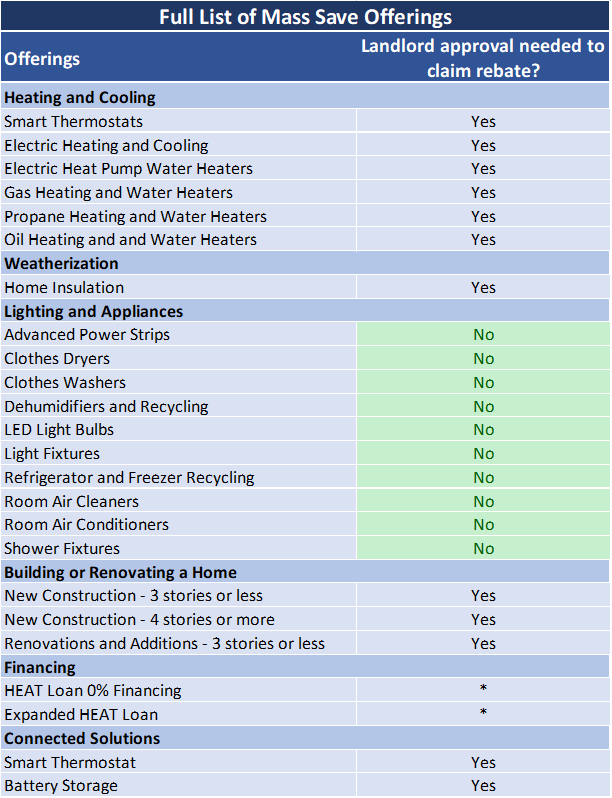
Massachusetts’ Mass Save program provides residents and businesses with rebates and incentives to promote energy savings while reducing costs. Like many energy efficiency programs across the country, Mass Save’s offerings for renters have some limitations. Landlords have little incentive to lower energy consumption since their tenants are usually the ones responsible for electric and heating bills. Customers who rent their homes must obtain written permission from their landlords prior to installing upgrades. While Mass Save rebates and incentives are available to homeowners, renters, and landlords—some offerings are more easily implemented than others. For example, claiming rebates on small household appliances like room air conditioners and dehumidifiers does not require a signature from the property owner. However, more intensive retrofitting projects that require a contractor (and that have the highest cost and emissions savings) require that permission.

Table revised for clarity on 5/20/2021.

Table revised for clarity on 5/20/2021.

*For income-based financing options, the requirement of landlord approval depends on what the loan will be used for. However, with the scale and cost requirements of the projects that promote the highest energy savings – it is likely that low-income households will need approval from the property owner either during, or prior to, applying for HEAT loans.

In order to receive a rebate, customers must submit a completed rebate form (either online or by mail), as well as a copy of the first page of their most recent electric bill and a receipt indicating purchase with the model, manufacturer, purchase date, price, and store name. For those who seek instant reimbursement for purchasing efficient appliances, don’t get your hopes up: it takes a while for most rebates and incentives to kick in. Even with online rebate forms, Mass Save takes six to eight weeks to process rebate applications and send funds to customers.

About 46 percent of Massachusetts residents are renters, with an even higher share in the Greater Boston area—so in order for energy efficiency programs to provide an equitable, effective distribution of energy and emissions savings participants must include customers who don’t own their property. Since many renters are responsible for paying home energy bills, the majority of landlords are not strongly incentivized to make changes to their property—even if their tenants’ electric and heating costs are cut significantly. As target years for greenhouse gas emissions reductions rapidly approach, maximizing energy savings for every household in Massachusetts—not just those who own their homes—is essential.

Sagal Alisalad Assistant Researcher


This is a part of the AEC Blog series

Thursday 05.13.21
Posted by Guest User
 

Equitable Development of Open Spaces

Open spaces are undeveloped pieces of land that are accessible to the public. They take the form of schoolyards, playgrounds, seating areas, plazas, empty lots, and green spaces like parks, community gardens, and cemeteries.

Open spaces are on the rise in urban areas across the United States due to the aesthetic, economic, environmental, and social benefits that they provide. Parks and green spaces improve mental health by reducing anxiety, depression, and stress, while also promoting economic activity. Particularly during the COVID-19 pandemic, parks and green spaces have been a place of refuge for people to get outside, exercise, view nature, and socialize at a safe distance. In addition, green spaces in urban areas provide cleaner air, stormwater control, and cooler temperatures.

Unfortunately, despite all the good open spaces can provide, they can also drive-up property values by as much as 20 percent, pushing low-income families out of adjacent neighborhoods. In other words, “upgrading” a neighborhood by adding an open space can result in gentrification: displacement of the current residents and businesses. According to a study of five medium-sized U.S. cities, the odds of gentrification of a neighborhood increase by more than 200 percent when a new greenway park is placed within a half-mile.  

Picture1.jpg

Gentrification tends to occur when the development of an open space lacks community involvement. Placemaking, the development of public spaces led by the community instead of a private entity, can help to prevent this unintended consequence by ensuring that the space connects to, and serves, the people that already reside there. Moreover, the type of open space matters. Linear greenways and parks that are located close to downtown areas are closely tied to gentrification. Avoiding these types of open spaces can reduce the risk of gentrification, but at the cost of green-space benefits.

Open spaces are integral parts of the well-being of a community, especially in urban areas. They provide places for socialization, community organizing, exercise, and other essential activities. Mindful development of these spaces, with community interests and needs at the forefront, can improve access to these spaces without changing the makeup of the neighborhood.  

Tanya Stasio Research Assistant


This is a part of the AEC Blog series

Tuesday 05.11.21
Posted by Guest User
 

Woke Washing in Energy Planning

You’ve heard of “green washing”: creating an environmentally sound image that is a false or a only surface deep in order to deceive consumers, voters, or policy-makers. Like solar panels powering the lights in a coal plant.

Woke washing? That’s the newly coined term for performative equity-promoting actions that get good press but fail to address systemic racism, gender disparities, and the ongoing marginalization of communities.

Woke washing is most commonly associated with the world of brand marketing: for example, when Nike announced that Colin Kaepernick would be the face of their new campaign in 2018 (after he was barred by the NFL for his peaceful protests against racial injustice), Nike was simultaneously facing allegations about its sweatshop conditions in developing countries as well as allegations that its corporate culture was misogynistic and toxic.

In the energy planning field, we see woke washing when well-intentioned energy policies that reduce greenhouse gases are assumed to enhance equity because poor communities will suffer the worst damages of future climate change and, therefore, any policy that addresses climate change must be good for equity.

We see woke washing when energy efficiency and renewable energy incentives are offered in the form of loans that poor households and households with bad credit can’t access, or in the form of rebates that require a substantial upfront capital investment that only richer households can afford.

We see woke washing when emission reduction programs focus on electric vehicles and homeowner benefits that lower costs for wealthier, whiter households while excluding lower-income households, bus-riders, and renters.

For example, in Massachusetts, the MOR-EV program (which pays rebates up to $2,500 for the purchase or lease of a new electric vehicle) has primarily benefited households living in the wealthiest areas of the Commonwealth. Almost 80 percent of MOR-EV rebates have gone to communities where the household income is higher than the state median; only 9 percent went to communities where the household income is lower than the state median. In addition, a full third of the program’s total expenditures supported the purchase of Tesla vehicles—a luxury car.

Achieving true climate equity means remedying the disproportionate effects of climate change and accounting for historical disparities that create vulnerability in the first place. The best way to develop a deep understanding of disparities, inequities, and burdens is to hear from those affected by them by giving them a meaningful role in decision-making. Achieving true climate equity also means being transparent about progress and/or backsliding as the case may be, and remaining accountable to equity goals and the public at large.

Dr. Liz Stanton Director and Senior Economist

2017%2BHeadshots_005.jpg

Dr. Bryndis Woods Senior Researcher


This is a part of the AEC Blog series

Thursday 05.06.21
Posted by Guest User
 

The Progressive Potential of a Carbon Dividend

As climate change becomes an increasingly prominent part of politics, it is painfully clear that the United States lacks an effective carbon price. An emissions trading scheme operates in California with a floor of $17.71 per ton, but failed at the national level during President Obama’s first term. In 2019, members of Congress introduced a new approach to carbon pricing: The Energy Innovation and Carbon Dividend Act (EICDA). The bill establishes a tax on carbon dioxide of $10 per ton and would increase that price annually by $10 per ton. A 2019 analysis at Columbia University projected that the tax on its own could reduce emissions between 36-38 percent by 2030.

Carbon taxes have declined in political popularity in recent years—including on the left. The tax is seen as a deviation from the massive public investment and industrial policy needed to move the economy. As demonstrated by the fight over I-732 in Washington State, there are difficult political concerns over equitably disbursing revenue and offsetting cash flow impacts on low-income families. The gilet jaunes protests over French President Emmanuel Macron’s gas tax increases highlight the pitfalls of “sin” taxes, especially ones that expect voters to bear price hikes on common staples without compensation.

image.png

EICDA bypasses much of this debate by simply sending all collected revenue back to individuals. There is promise to this fee-and-dividend approach. Remitting the revenue would still allow the tax to raise the price of dirty energy and thereby offer a competitive advantage to energy efficient appliances, cleaner vehicles, and green electricity. In addition, remitting the revenue equally across taxpayers is progressive. In a piece for the People’s Policy Project, Anders Fremsted and Mark Paul note that carbon emissions increase substantially as people’s incomes increase. The richest earners emit over  15 tons of carbon dioxide per year more than the poorest earners. Those rich earners would pay more under a carbon tax. But the dividend ensures that low-income voters are compensated for the larger percentage hit to their monthly budgets.  

Those reimbursements could also allow a higher carbon tax rate. Initially, the size of the monthly dividend under the Energy Innovation and Carbon Dividend Act would be $16-$24 per month. This modest dividend would increase with the tax rate. But Fremsted and Paul propose a much higher starting price of $230 per ton, purposefully engineered to force a faster adjustment from fossil fuels. Under their scheme, the dividend would increase annual costs to the poorest 10 percent of earners by $866, while paying them $1,371. The richest individuals would pay $2,501 per year. Meanwhile, the bottom half of earners would see a boost in earnings. The same would be true under EICDA, in which dividends prove a net benefit to low and middle income households.  Evidence from Canada’s carbon tax and dividend supports this argument. Their federal $40 per ton price yielded average annual net benefits to households of $74 in Ontario and $346 in Alberta, the center of the Canadian oil industry. These net earnings might just be the key to making aggressive carbon taxation politically sustainable.  

Chirag Lala Research Assistant


This is a part of the AEC Blog series

Tuesday 05.04.21
Posted by Guest User
 

Renewable Energy Hits Record Growth in 2020 Despite COVID-19 Set-Back

2020 was a record year for renewable energy despite early setbacks relating to the COVID-19 pandemic. The International Energy Agency (IEA) reported that net installed renewable capacity grew by nearly 4 percent and accounted for almost 90 percent of the increase in total power capacity worldwide. This growth was driven in part by the United States, where large-scale capacity additions grew at a record pace, and local governments invested in more renewable energy than ever before. These trends will likely continue as state and local governments ramp up efforts to achieve 2030 and 2050 emission reduction targets.

The COVID-19 pandemic was expected to delay renewable projects that had planned operational dates in 2020. Many government-mandated quarantines included construction suspensions which slowed renewable infrastructure development for the first half of 2020. However, in late 2020 IEA had to revise their May 2020 forecast for renewable capacity additions for the year. Construction activity in the United States unexpectedly ramped up in the second half of 2020 as restrictions started to ease, pointing to a fast recovery from pandemic delays. The Institute for Energy Economics and Financial Analysis (IEEFA) reported on a utility-scale construction boom in the United States which led to 17 gigawatts (GW) of renewable energy added in 2020; an 85 percent increase in added capacity compared to 2019. Total solar capacity alone more than doubled to 11 GW.

Picture1.png

As more renewable capacity is installed in 2021, local governments in the United States are procuring renewable energy at a record level. According to the American Cities Climate Challenge Transaction Tracker, local governments built 3.7 GW of new renewables in 2020, compared to 2.9 GW in 2019. That is a 23 percent increase from 2019, and 207 percent increase from 2017. Despite cities facing severe budget shortfalls due to the COVID-19 pandemic, local governments are continuing to procure renewable energy—a promising sign for emission reduction targets across the nation.

Renewable energy investments are forecasted to continue their growth through the next few years. The Energy Information Administration’s (EIA) Short Term Energy Outlook forecasts the share of total electric power generated with solar and wind capacity to increase from 20 percent in 2020 to 21 percent in 2021 and 22 percent in 2022. At the same time, EIA expects the share of electric power generated with gas to fall from 36 percent in 2021 to 35 percent in 2022, driven primarily by rising gas prices and new additions of solar and wind generating capacity.

In 2020, renewable energy projects weathered unexpected stoppages and still emerged with record growth. This highlights the resiliency of renewable energy investments, and the significant progress being made towards emission targets in the United States.

Eliandro-001.jpg

Eliandro Tavares Assistant Researcher


This is a part of the AEC Blog series

Thursday 04.29.21
Posted by Guest User
 

The Untapped Potential of Offshore Wind

Renewable sources like solar and land-based wind are becoming larger parts of the U.S. energy supply. However, the potential of offshore wind to supply clean, renewable energy is still largely untapped. The costs of offshore wind have fallen over the past decade making it an affordable, low environmental-impact, alternative for the dirtier energy sources that are on their way out.  

Offshore wind development provides indirect environmental benefits by replacing polluting energy sources and direct economic benefits by providing jobs for wind farm operation and maintenance, and construction of related infrastructure. Beyond local jobs, offshore wind provides local power, reducing the need for imported power from neighboring states or countries.

800px-Middelgrunden_wind_farm_2009-07-01_edit_filtered2.jpg


Twenty-nine states have the potential to generate offshore wind energy. As states move towards their decarbonization goals, taking advantage of this potential is essential. A large part of decarbonization is relying less on fossil fuels like gas, oil, and coal to heat our buildings; meaning most (or all) of our energy system will need to transition to electric power. Electrification of the energy system will increase electricity demand, requiring even more renewable energy.

 Solar and wind sources, coupled with battery storage, are poised to play a major role in the nation’s future energy system. Support from the Biden Administration, decarbonization commitments by states, and lots of new investment are all fueling the offshore wind movement. States along the east coast have already committed to purchasing about 30 GW offshore wind by 2035.

The potential for offshore wind in the United States has been left unused, but not for long. With support from federal, state and local government, increasing affordability, and the push towards renewable energy sources, offshore wind is poised to play an important role in the future of the nation’s energy system.

crop.jpg

Tanya Stasio Research Assistant


This is a part of the AEC Blog series

Tuesday 04.27.21
Posted by Guest User
 

Cleaning up with "Zero Waste"

Since April 22, 1970, Earth Day has been celebrated as a day of action to bring awareness and support to environmental issues. This year’s theme, “Restore Our Earth,” inspires participants to repair and rebuild the world’s ecosystems through environmental literacy, reforestation, sustainable food practices, citizen science, and a global waste cleanup.

The global waste problem presents a continuous threat to the wellbeing of communities and ecosystems. Although individual action through cleanups has been successful in removing litter and debris from roadways, shorelines, and public spaces, we also need upstream interventions by local governments and manufacturers that take a holistic approach to waste management.

“Zero Waste” is one such strategy that many communities across the United States and around the world have adopted to improve their waste management systems. The Zero Waste International Alliance defines “zero waste” as:

“The conservation of all resources by means of responsible production, consumption, reuse, and recovery of products, packaging, and materials without burning and with no discharges to land, water, or air that threaten the environment or human health.”

elena-mozhvilo-eA32JIBsSu8-unsplash.jpg

While this approach to waste management seeks to increase recycling and composting efforts, it also focuses on rethinking the production of materials. Under the zero-waste framework, the materials we use for packaging, electronics, and other goods are made to be more durable, repairable, reusable, and fully recyclable or compostable, which significantly reduces the amount of waste sent to landfills and incinerators.

Today, waste disposal not only generates substantial air and water pollution, but also releases greenhouse gas emissions into the atmosphere. Zero waste strategies offer an opportunity for cities and towns to clean up their waste management practices by changing the way we consume and dispose of materials while also achieving emission reductions and creating a healthier environment.

Josh.jpg

Joshua Castigliego Researcher


This is a part of the AEC Blog series

Thursday 04.22.21
Posted by Guest User
 

The Benefits of Targeting Co-Pollutants While Reducing Greenhouse Gases

A new report from the Political Economy Research Institute (PERI)—Green for All: Integrating Air Quality and Environmental Justice into the Clean Energy Transition—argues that policies focused solely on reductions in carbon dioxide may increase the harms from other pollutants on Black, Hispanic, and low-income populations. Fossil fuel sources release greenhouse gases like carbon dioxide. No matter where it is released, more carbon dioxide contributes to the increase in global temperatures. However, burning fossil fuels also generate “co-pollutants” that have more local impacts. Ignoring those co-pollutants has costs to public health. Air pollution alone can decrease average life expectancy by 1.6 years. And these impacts tend to be concentrated low-income communities and communities of color due to the systematic siting of gas, oil and coal-fired power plants near their homes.

California—-which focused specifically on statewide greenhouse gases reductions throughout its cap-and-trade system—offers an example. With a modeled a 20 percent reduction in GHG emissions, the PERI report found a doubling in health and welfare impacts from co-pollutant and a tripling for Black residents in particular. A separate study in the journal, PLoS medicine, noted that California reduced emissions by replacing out-of-state coal energy with domestically sourced natural gas generation, causing an increase in co-pollutants.  

The alternative to a sole focus on greenhouse gas reductions is a strategy that also requires reductions in co-pollutants, both nationally and in specific communities. The PERI report studied the results of adding these additional requirements to a 20% national reduction of CO2-equivalent emissions. The requirements are designed to emphasize the geographic distribution of air quality benefits and to reshape decisions on which gas plants are tapped for additional generation.

image.png

PERI found that mandating a 50 percent reduction in nationwide damages from co-pollutant generated $9.56 billion in benefits, while only costing an additional $4.81 billion. On top of this, emphasizing 50 percent damage reductions in black, brown, and low-income communities generated another $10.61 billion in benefits, while only costing $4.84 billion more. Without these additional requirements, these co-pollutant damages from natural gas increased by 30 percent - even if they fell overall across the country. They would disproportionately fall on Hispanic communities, who tend to live near gas-fired units. Not only do these communities benefit from an environmental-justice target, but they do so without a change in the overall gas-coal mix for the country.

These results have clear implications for decarbonization beyond the electricity sector. In a previous post, I noted the benefits of prioritizing Asian-American communities – who suffer disproportionately from vehicular air pollution – during the rollout of electric busses. Eliminating co-pollutant hotspots will also be crucial as the U.S. builds an electric charging infrastructure. Making the transition equitable will also make everyone healthier.

Professional+Headshot+--+Chirag+Lala+(1).jpg

Chirag Lala Research Assistant


This is a part of the AEC Blog series

Tuesday 04.20.21
Posted by Guest User
 

Puerto Rico's Electric Infrastructure Today

In 2017, Hurricane Maria caused immense damage to Puerto Rico and the surrounding Caribbean Islands. A report submitted by the Puerto Rican government to congress in 2018 estimated that it would require almost $140 billion for the island to fully recover. Eighty percent of the island were without power several weeks after the storm. It took Puerto Rico almost a year to restore power completely, and even still, the island’s infrastructure remains vulnerable to the heightened climate events, like many other parts of the country.

Puerto Rico’s energy utility (PREPA) developed an integrated resource plan (IRP) in June 2019, which Clinic Director, Dr. Liz Stanton, recommended the Puerto Rico Energy Bureau reject. Elements of the IRP included a proposed modernization of the grid over twenty years, with the installation of 1.4 GW of solar and 0.9 GW of battery storage, but also the retrofitting of oil-fired plants to burn natural gas and diesel. The Puerto Rican government also passed the Public Energy Policy Law of Puerto Rico, which establishes a 100 percent renewable goal by 2050, with intermediary goals of 40 percent renewables by 2025 and making coal obsolete by 2028.

wei-zeng-48iZAbNgU8U-unsplash.jpg

Following Hurricane Maria, Governor Rosselló (who resigned after accusations of corruption), launched the privatization of PREPA. This process has been ripe with corruption too—PREPA established a no-bid contract with Whitefish Energy Holdings, which was connected to then-U.S. Interior Secretary Ryan Zinke, and Cobra Acquisitions, a large fracking company, earned $1.8 billion in federal contracts to repair the grid. Company officials were later charged with bribery and fraud.

Near the end of 2020, the Trump Administration announced the Federal Emergency Management Agency (FEMA) authorization of $9.6 billion to rebuild the island’s power infrastructure, a fraction of what is likely required to modernize the grid, ensure resiliency, and move towards renewables. New York State Governor Cuomo renewed an ongoing partnership with the New York Power Authority and PREPA to assist in developing a spending plan for FEMA’s funds, along with establishing other best practices. This year, PREPA issued a request for proposals to procure 1 GW of renewable energy resource capacity in February 2021. The future of Puerto Rico’s energy infrastructure, along with PREPA’s unstable process towards privatization, is plagued with uncertainty, even as ongoing partnerships and aid packages are assisting in slowly modernizing the grid.

vsco5f33620738db5.jpg

Myisha Majumder Research Assistant


This is a part of the AEC Blog series

Tuesday 04.13.21
Posted by Guest User
 

Solar-Battery Storage Hybrids are All the Rage

The U.S. electric grid is decarbonizing and is likely to continue to do so given the increasing competitiveness of renewable resources over traditional resources. Most markedly, solar photovoltaic (PV) installations have skyrocketed in recent years due to plummeting technology costs. Solar PV provides low-cost, low-risk energy that coincides with hours of the highest level of demand, which for most utilities is during hot summer afternoons.

But a high enough concentration of solar PV shifts the need for power to the evening, after the sun has set. This necessitates resources that can quickly provide power to pick up the slack. Effectively, the default resource to serve this need was a natural gas combustion turbine (CT), which can rapidly generate power without the lead time required of a coal or nuclear plant. Many capacity markets in the United States are based on the premise that a CT is the “marginal” capacity resource filling this need for rapid response. But in recent years, battery storage has become a more attractive way to fulfil this need. Solar PV and battery resources can be sited together (a solar-battery “hybrid”) whereby the solar PV charges the battery during the day and the battery can discharge that power at night. Battery resources that are paired with solar PV can also get the same federal tax credits as the solar resource.

Utilities are increasingly adopting renewable and storage technologies for both policy and purely economic reasons. For instance, Public Service Company of New Mexico (PNM) is replacing the retiring San Juan coal plant with solar and battery hybrids, and the company is asking for approval to do the same for its share of the Palo Verde nuclear plant. PNM illustrated the value and complementarity of solar and battery storage hybrids below:

Source: Copy of Figure NS-3 from Direct Testimony of Nicolai Schlag, Before the New Mexico Regulation Commission, Case No. 21-04-02-UT, p.11.

Source: Copy of Figure NS-3 from Direct Testimony of Nicolai Schlag, Before the New Mexico Regulation Commission, Case No. 21-04-02-UT, p.11.

The boom in solar PV, storage, and hybrids is not a flash in the pan. Like solar PV, battery storage costs have fallen dramatically and are expected to continue to decrease markedly in the future. While both resources are attractive, when combined, they are mutually beneficial. Expect to see many more in the near future. 

2017%2BHeadshots_002.jpg

Tyler Comings Senior Researcher


This is a part of the AEC Blog series

Tuesday 04.13.21
Posted by Guest User
 

Boston's Journey to Carbon Neutrality: Buildings Sector

In 2019, the Boston Green Ribbon Commission and Boston University’s Institute for Sustainable Energy released the Carbon Free Boston report showing a path forward for carbon neutrality for the city and recommending detailed solutions. Later in 2019, the City released its updated Climate Action Plan, with a refined goal of achieving carbon neutrality in 2050.

One critical sector for emissions in the City is buildings. The Climate Action plan includes eighteen strategies, with five focusing on buildings: a net-zero standard for municipal buildings (achieved), a net-zero standard for City-funded affordable housing (in progress), update zoning to a zero net carbon standard (in progress), energy efficiency in municipal buildings (in progress), and developing a building emissions performance standard (in progress). Carbon Free Boston explained that Boston has an older building stock with less insulation and older, inefficient equipment, like HVAC systems. These factors contribute to higher energy use, and thus, higher GHG emissions. Newer buildings are required to have better insulation and more efficient heating, cooling, and appliances.

photo-1460472178825-e5240623afd5.jpeg

One of the tools the Carbon Free Boston team emphasized was the Boston’s Building Energy Reporting and Disclosure Ordinance (BERDO). Established in 2013, BERDO requires reports on large buildings’ annual energy and water usage, as well as GHG emissions, which are then made publicly available. The Ordinance also requires large buildings to undergo energy assessments every five years.  

This year, Boston has made efforts to strengthen its BERDO rule, and has released a draft summary of improvements and changes for public comment. The two largest upgrades include the introduction of a building emissions performance standard within BERDO, and an acknowledgment and emphasis of environmental justice concerns. These improvements to BERDO will be crucial for Boston reducing their GHG emissions and reaching carbon neutrality in a way that also promotes equity.

A previous version of the blog stated Boston’s 2019 updated climate goals to be reducing greenhouse gas (GHG) emissions by 25 percent by 2020 and 80 percent by 2050, which were the CAPs original 2011 goals.

vsco5f33620738db5.jpg

Myisha Majumder Research Assistant


This is a part of the AEC Blog series

Thursday 04.08.21
Posted by Guest User
 
Newer / Older