• Home
  • About
    • Our People
    • Mission and Funding
    • 990 Filings
    • Governance and Disclosure Statements
  • Our Work
    • Publications
    • Newsletters
    • Equity Resources
  • Blog
  • Jobs
    • Internships
    • AEC Fellowship
    • Careers
  • Pro Bono Fund
    • Pro Bono Fund
    • Donate
    • MassCEC Empower Grant
Applied Economics Clinic
  • Home
  • About
    • Our People
    • Mission and Funding
    • 990 Filings
    • Governance and Disclosure Statements
  • Our Work
    • Publications
    • Newsletters
    • Equity Resources
  • Blog
  • Jobs
    • Internships
    • AEC Fellowship
    • Careers
  • Pro Bono Fund
    • Pro Bono Fund
    • Donate
    • MassCEC Empower Grant

Uncertain about how much to discount the future? You're discounting too much.

Our most important decisions—about slowing climate change, funding childhood education, eating ice cream—often require weighing present costs and benefits against future ones. Crucially, we are usually pretty uncertain about how much, if at all, to discount the future in favor of the present. A federal Interagency Working Group (IWG) is about to pick a single number to try to answer this complicated question, a "discount rate." Whatever number IWG settles on, the U.S. government will use it to decide if the future benefits of green energy investments are worth the present costs.

The point of this blog post is to show, using a bit of math, that picking a discount rate while ignoring our uncertainty about the number we've picked makes us systematically undervalue future costs and benefits. Ignoring uncertainty makes us short-sighted.

Ask an economist about weighing present and future benefits, and they will give you an answer like this: if you received $100 now, you could invest it at some rate of return "r" (for example r might be 0.03 or 3 percent) and in a year you'd have (1 + r)*$100 (in our example, $103). But if instead you just received $100 a year from now, well, you'd just have $100. With some hand-waving, the economist concludes that a dollar benefit is worth 1 + r times more if we get it now, instead of getting it a year from now. Or turning things around, that same future benefit is worth 1/(1 + r) times less if we get it a year from now, instead of now; and if we get it t years from now, the value is further reduced to 1/(1+r)t. Here, r is the "discount rate": the bigger it is, the more we discount future benefits when considering them in the present; and the further into the future the benefits will occur, the more we discount them.

Source: IWG, 2021

Now, even if we buy this story (and the sneaky shift from "benefit" in general to "dollars" in particular), there's a catch: we don't really know what rate of return our investments will actually deliver. At best, we might have a range of plausible values for r, some values perhaps more probable than others.

For example, suppose we believe there are three equally probable values for r: 0.01, 0.03, and 0.05—this is roughly the range that IWG is considering for discounting future climate damages. If you are a policymaker considering a cost of climate change (e.g. $1 billion of storm damage) that will occur in 50 years, you need some way to turn $1 billion in 50 years into a what it's worth today, the expected present value of that climate cost. How should you do it?

It turns out there are two ways to calculate an expected present value: 1) the easy way, and 2) the easy and correct way. Both are just a matter of taking an average.

The first way is to calculate the average of the plausible values of r, then plug that average into our present value formula. In our example, the average value of r is 0.03, so we get ($1 billion)/(1.03)50 = $230 million. This method is simple, but wrong: it's equivalent to pretending we know r will be 0.03, ignoring our uncertainty about that prediction. It's not clear whether IWG will end up taking an average, but they do seem to be trying to pick a single number to use in any given analysis.

The second way, the correct way, is to plug each plausible value of r into the present value formula, one at a time, then take the average of the resulting present values. In our example, this is ($1 billion)*(1/1.0150 + 1/1.0350 + 1/1.0550)/3 = $310 million. That's 80 million dollars higher, or 35 percent higher, than the mistaken estimate.

The difference between these two estimates comes from uncertainty: the first ignores uncertainty about the discount rate, and the second correctly accounts for it.

This is just an example; a more realistic calculation would use more than three possible discount rates, giving greater weight to the more likely discount rates. But the phenomenon we've illustrated — that ignoring uncertainty necessarily leads to an underestimate of present values —is extremely general. It comes from a theorem of probability called Jensen's Inequality, which applies regardless of the form the uncertainty takes.

Underestimating the present value of future costs and benefits could be catastrophic. Such myopia may lead to the erroneous conclusion that the long-run benefits of green infrastructure investments are not worth their present costs, when they are; or that present inaction on climate change is cheap, when it is not. Such myopia endangers long-run prosperity and survival. To avoid the dangers of short-sightedness, the first step is to admit to uncertainty regarding how much to value things that will happen in the future. 

Gabriel Lewis Research Assistant


This is a part of the AEC Blog series

tags: Gabriel Lewis
Tuesday 10.19.21
Posted by Guest User
 

Indigenous Opposition to Line 3 Shows a Path Forward on Climate

Enbridge’s Line 3 is a pipeline carrying crude oil from Alberta, Canada, through Minnesota, into Wisconsin. It was built in the 1960s and is scheduled for replacement, and construction began in December 2020. However, a coalition of local Tribes is fighting the replacement in Federal Court; the Tribes argue that the U.S. Army Corps of Engineers did not properly evaluate the potential damage to wetlands and waterways in Minnesota, including the impacts of a potential oil spill. Other groups argue the Line is in violation of treaties between the United States and the Anishinaabe and Ojibwe peoples, especially of provisions that grant Tribes sovereignty over the land, and harm their ability to use the land for rice cultivation. This is just one of a number of ongoing disputes between Tribes across the United States and pipeline projects: Keystone XL, Dakota Access, Enbridge Line 5, and others.

These critical, and time sensitive, disagreements contesting Indigenous land rights raise an important related question: Why is the United States government continuing to support pipeline construction projects at all?

The United States became an energy exporter during the Obama and Trump Administrations. Oil production doubled and gas production increased by 60 percent between 2008 and 2019. Pipelines are critical infrastructure to continuing this expansion. If the United States does not rapidly shift to renewable generation—an indispensable step in its decarbonization policy—its continued reliance on oil and gas will create additional pressure on firms and policymakers to continue or even expand pipeline projects. The International Energy Agency has already argued that funding for new oil and gas projects must be halted today if the world is to reach net zero emissions by 2050 and limit temperature increases to 1.5 degrees Celsius above pre-industrial levels.

Line3

Opposition from Tribes to new and existing pipeline projects amplifies the voices of climate activists across the world. The Canadian Government’s Missing and Murdered Indigenous Women and Girls (MMIWG) report highlighted the role of worker camps on oil and gas projects—the so called “man camps”—as centers of perpetuating violence against and disappearances of Indigenous women. Stop Line 3, a campaign organizing against Enbridge’s Line 3 replacement, has highlighted the State of Minnesota’s calculations showing a  cost to society from emissions enabled by the pipeline totaling $287 billion over the project lifespan of 30 years . Stop Line 3 demands decommissioning the old Line 3 and justly transitioning to a “renewable and sustainable economy.” EarthJustice recommends a number of additional steps for the Biden Administration to take that build on the precedent-setting cancellation of the Keystone XL pipeline earlier this year, including: cancelling cross-border permits for oil and gas pipelines, directing the Department of Energy to research the climate impacts of exporting liquified natural gas, eliminating the nationwide permit system for pipelines and only permit pipelines on an individual basis, and require a federal review of life cycle emissions from pipeline projects.

But even these steps would be insufficient to do both what Indigenous groups demand and what would help meet regional and international climate goals. Real transformation requires large and sustained investment in the dissemination and production of renewable energy and energy efficiency measures, just transition assistance for Indigenous workers who would be affected by the transition, and financial guarantees that empower Tribal governments to take proactive investment of their own, such as the Kayenta Solar Project on Navajo Land. Other legal changes should make it easier for Tribes to own and operate renewable generation without onerous regulations; a 2005 Federal Law enabling Tribes to own wind and solar generation on reservation land has yet to be used in part because it includes a requirement to partner with external parties. This forces Tribes to lease their land to energy developers instead building and owning their own energy sources. Facilitating Tribes’ financial and legal agency to chart their own path would not only be in the spirit of treaties between Tribal governments and the United States, it would represent a meaningful alternative to leverage against pipelines like Line 3.

Chirag Lala Researcher


This is a part of the AEC Blog series

tags: Chirag Lala
Thursday 10.14.21
Posted by Guest User
 

Investing in a Clean Energy Future

Universities around the country and the world are making headlines for investing in a greener future for their students and communities. Harvard University joined several other U.S. colleges and universities on September 10 in divesting its nearly $42 billion endowment, the largest of any university in the United States, from the fossil fuel industry. This eye-popping divestment is part of a larger trend among numerous higher education institutions and systems that has gained steam over the past few years.

Some universities, like Rutgers University, George Washington University, and the University of California system, have fully divested their endowments from fossil fuels. Other universities are enacting gradual divestments from fossil fuels. Stanford University, for example, has only divested from coal companies.

Harvard is also not the only university in the Greater Boston metro area to divest its endowment from fossil fuels. The University of Massachusetts Foundation, Boston University, and Tufts University have also approved measures to divest their endowments from coal, tar sands, and/or all fossil fuels. Boston University’s announcement came only a few days after Harvard’s announcement, illustrating the powerful message sent by a university’s decision to divest.

maxim-hopman-fiXLQXAhCfk-unsplash.jpg

The divestment trend is not unique to the higher education sector, and the broader push for divestment is making waves across the economy. Cities, faith-based organizations, NGOs, and other institutions are divesting funds, all chipping in towards a valuation of just under $15 trillion of worldwide institutional divestment in fossil fuels according to Fossil Free—a fossil fuel divestment data tracking project of the environmental advocacy group 350.org. As more individuals and institutions pull money from direct and fossil fuel-adjacent investments, banks and financial institutions are taking notice. A 2021 study published in the Journal of Economic Geography found that, after analyzing trends in 33 nations, countries with the strongest fossil fuel divestment movements in a given year also saw their oil and gas industries raise less money in that same year compared to historical averages. Given this current economic backdrop, it comes as no surprise that equity funds investing in fossil fuels were among the worst performing funds in 2020.

The power of divesting university endowments is clear, and it has the potential to reshape our economy in the near future. Environmental equity and climate change mitigation will take more than concrete government policies and scientific models to be successful—it will require a conscious shift in our institutions and economy. Universities are leading the way in taking action to benefit students and their communities alike by investing in a clean energy future.
Levi - headshot AEC website.jpeg

Levi Bevis

Communications Assistant


This is a part of the AEC Blog series

tags: Levi Bevis
Wednesday 09.29.21
Posted by Guest User
 

Youth Mental Health and Climate Change

This month, researchers from the University of Bath, University of Helsinki, The College of Wooster, New York University, the University of East Anglia, Stanford University and Oxford Health published the results of a survey of 10,000 young people (aged 16 to 25) across ten countries that asked about their thoughts and feelings regarding climate change and government responses.

They found that a large majority of youth respondents are worried about climate change (84 percent were at least “moderately” worried while 59 percent were “very” or “extremely” worried) and that over half of respondents said that they feel sad, anxious, angry, powerless, helpless and guilty.

About 40 percent of the young people surveyed indicated that they are hesitant to have children because of the climate crisis and over 45 percent said that their feelings about climate change negatively affect their daily life.

Picture1.jpg

Seventy-five percent agreed with the statement that the “future is frightening,” 56 percent believe humanity is doomed, and more than 50 percent agreed that they would have fewer opportunities than their parents did.

Sixty-four percent felt that governments are not doing enough to address the climate crisis or to protect them or future generations. A similar number said they felt betrayed by older generations and governments. Less than 40 percent of respondents across nine of the ten countries agreed that government “can be trusted”—with just 21 percent of American respondents agreeing with that statement. The study found significant, positive correlations between feelings of worry, anxiety, and distress and feelings of betrayal and negative feelings about governments responses to climate change.

In sum: Youth are worried and angry about the climate crisis, and they lay the blame squarely at the feet of governments that have failed to reduce global greenhouse gas emissions.

One of the study’s authors, Caroline Hickman from the University of Bath, said that the study “paints a horrific picture of widespread climate anxiety in our children and young people. It suggests for the first time that high levels of psychological distress in youth is linked to government inaction. Our children’s anxiety is a completely rational reaction given the inadequate responses to climate change they are seeing from governments.”

Feelings of worry, anxiety, and betrayal about climate change and the lack of government response to it threaten the mental health and wellbeing of an entire generation of young people who have contributed the least to the problem of global climate change but are all too aware that they will suffer its worst impacts.

Correct 2017%2BHeadshots_005.jpeg

Bryndis Woods Senior Researcher


This is a part of the AEC Blog series

tags: Bryndis Woods
Wednesday 09.22.21
Posted by Guest User
 

What Happens to Consumption when we Decarbonize?

A commonly expressed concern about climate models used in policy making is that they place too much emphasis on achieving economic growth, even kinds of growth that interfere with greenhouse gas emissions reduction targets. For example, a report by the European Investment Bank warns against letting economies grow too fast, suggesting that higher growth—say from a massive climate investment program—might increase emissions if the investment unintentionally drives fossil fuel investment as well. In the EIB’s view, climate investment and a healthy economy are benefits to be traded off against one another: We can only have one or the other.

But this argument is unnecessarily bleak. Investment in new renewable generation, energy efficiency improvements, zero-carbon manufacturing, and clean transportation makes green goods and services for workers to purchase, and gives workers and income with which to make these purchases. Even though climate investment increases the size of the economy, emissions continue to fall because the new investment is replacing money spent on dirtier technologies, not adding to it.

RooftopSolar.jpg

Instead of facing a tradeoff between climate investment and economic well-being, rich nations can make climate investment succeed by facilitating the rapidly increasing market in cleaner goods and services. For businesses to invest in zero emissions products they need to see a track record of success: customers buying those products. That increased certainty will lead businesses to spend more on improving green products, making them cheaper, and disseminating them widely.

Effective government policy can accelerate this process. In the United States, the government could use an aggressive clean energy standard. Direct federal purchases of cleaner technologies, such as by electrifying the government’s entire fleet of vehicles or transitioning all government properties off fossil fuel energy sources, would kickstart an enormous market for greener production. Any effort to tax goods that result in greenhouse gas emissions should be paired with dividends to consumers, giving them funds to spend on cleaner alternatives. All of these policies to boost green consumption are necessary complements to policies that focus specifically on green technological innovation, commercialization of new technologies, or policies that help businesses overcome capacity or supply chain problems. These actions can also cement the political viability of decarbonization by ensuring that workers and communities reap the rewards of clean investment.

Chirag Lala Researcher


This is a part of the AEC Blog series

tags: Chirag Lala
Tuesday 09.14.21
Posted by Guest User
 

Give States the Room to Decarbonize

In a previous blog post, I wrote about steps the U.S. federal government can take to invest sufficiently in decarbonization despite the self-imposed limitations on congressional appropriation. Similar steps are needed for states and municipalities. They are the first governments to feel the impact of natural disasters and increased pressure on public services. And they play an outsized role in the financing of American infrastructure.

Unlike the federal government, most state governments are constitutionally required to balance their budgets. This restrictive practice can result in undesirable outcomes during recessions when additional government spending is badly needed to turn the economy around, but states and municipalities are experiencing dramatic declines in tax revenues. A bad enough economic crisis could force states to cut allocations to renewable energy and efficiency investments. The bond market for state and local governments is not much better. According to Yakov Feygin at the Berggruen Institute, the smaller size of municipal bonds, sheer variety and lack of standardization, and number of municipal governments limit the bond market’s ability to effectively finance infrastructure. The lack of a permanent emergency lender also means interest rates sharply increase in financial crises—making borrowing more expensive.

Renewable_energy_park.jpg

Three specific reforms should be enacted to give states and local governments more room to respond to the climate crisis. First, Congress should institutionalize a permanent system of grants to state and local governments that rise automatically when unemployment increases. Second, the Federal Reserve should revive an improved version of the Municipal Liquidity Facility that it used to stabilize interest rates in the municipal bond market during the early months of the Covid-19 pandemic. This time, it should lend at more generous rates instead of at a penalty, accept bonds of longer maturity, and expand the eligibility of borrowers. The Federal Reserve should also specify that it will specially seek out bonds for purchase that fund climate investment (so-called “green bonds”). Finally, Congress should create mechanisms by which the Federal government can borrow money on states’ behalf, provided they use it for specific purposes like decarbonization. This would effectively bypass the straitjacket on state-level fiscal policy imposed by balanced budget amendments or local laws that limit tax increases.

State and local governments have a lot of agency to address the climate crisis. The Political Economy Research Institute (PERI) publishes climate plans for specific states with tailored policies for pursuing ambitious climate targets. Carrying out those plans will be expensive. California climate plan’s would enable it to become a zero emission economy by 2045 by spending 3.8 percent of its GDP ($138 billion) per year on average between 2021 and 2030. West Virginia would need to spend 2.4 percent of its GDP ($2.1 billion) per year between 2021 and 2030 to reduce emissions to one-half of 2018 levels by 2030. While the PERI reports meticulously detail ways to raise the money, the additional steps proposed in this post would greatly increase the capacity of states to painlessly raise funds without making harsh cuts to other vital programs or pursuing unpopular tax increases. These actions would also ensure municipal interest rates remain low—which the reports argue would keep overall costs down—or fall even lower. Best of all, states on course to meet their climate targets could cheaply and profitably invest in more capacity to help lagging states.

AEC+2021-6.jpg

Chirag Lala Researcher


This is a part of the AEC Blog series

tags: Chirag Lala
Thursday 09.02.21
Posted by Guest User
 

Massachusetts' Electrification Progress is Falling Short


About one-third of Massachusetts’ emissions come from the buildings sector. In 2019, over 75 percent of households in Massachusetts used fossil fuels to heat their homes; only 17 percent used electricity (much of which is old-fashioned and inefficient “electric resistance” heating). Electrification—or switching from fossil fuels (like gas and oil) to heat our buildings, to using modern electric heat pumps—has been identified as the best least-cost strategy to reduce emissions from buildings in the Commonwealth.

A recent article from the Boston Globe calls out Massachusetts’ slow progress on electrifying homes. In order to meet the Commonwealth’s decarbonization goals, an average of 100,000 homes per year over the next 30 years must be switched over to electric heating. However, just 461 homes made the switch in 2020. More broadly, according to data from the U.S. Census American Community Survey, the share of homes in Massachusetts using electricity for heating has only gone up by about 1 percent from 2015 to 2019.

image (6).png

Despite the declining costs of high-efficiency electric heating equipment like air-and ground-source heat pumps, widespread adoption of heat pumps is held back by physical barriers such as incompatible infrastructure and informational barriers like inadequate information and status quo bias. Moreover, for low- and moderate-income households, access to credit and the high upfront cost of heat pumps can be a challenge.

To meet the Commonwealth’s 2050 climate goals, policymakers need to establish large incentives for heat pumps, provide subsidies for low-income and rental housing upgrades, and increase education and outreach to increase information availability and access. Without action, households will likely install new gas systems, with an average lifespan of 15 to 30 years, that will not only slow progress on meeting Massachusetts’ climate targets but will cost these families more over time.

Tanya Stasio Researcher


This is a part of the AEC Blog series

tags: Tanya Stasio
Wednesday 08.25.21
Posted by Guest User
 

IPCC AR6 Climate Change 2021: What’s New


On August 6, the Intergovernmental Panel on Climate Change (IPCC) released the first part of its Sixth Assessment Report (AR6), focusing on the scientific basis underpinning change-related policies by the international community. More than 14,000 citations were referenced in the AR6 and a total of 78,007 expert and government review comments were included.

The IPCC’s critical findings from this report include:

  • The global surface temperature is 1.09°C (1.96°F) warmer than it was in 1900.

  • It is unequivocal: Human activity is responsible for global warming.

  • If current emission levels are maintained, it is highly likely that global warming will exceed 1.5℃ above preindustrial levels and continue to accelerate during the 21st century.

  • Extreme weather, heatwaves, floods have become more frequent and intense.

Source: IPCC

Source: IPCC

Six days after this first section of AR6 was released, the third section of the report (not planned for publication until next year) was leaked by a group of scientists concerned that governments could water down the publication since they have the authority to revise the ‘Summary for Policy Makers’. The leaked report states that the rich are more responsible for global warming than the poor. According to the Guardian, the report concludes “The top 10% of emitters globally, who are the wealthiest 10%, contribute between 36 and 45% of emissions, which is 10 times as much as the poorest 10%, who are responsible for only about three to 5%.”

Under the Paris Agreement, 191 countries agreed to meet every five years to review implementation progress and prepare updated Nationally Determined Contributions to emission reductions. The first meeting, ‘Global Stocktake’ will be held in 2023 and the complete version of the AR6 will be published just before the meeting. Findings from AR6 and the leaked third report should serve as a wake-up call to nations taking part in the Paris Agreement, whose main objective is to keep global temperature rise below 2°C.

Without deep reductions in greenhouse gas emissions, particularly from wealthier nations, global temperature rise will exceed that threshold. Carbon in the atmosphere has been rising steadily and is currently at an all-time high. It’s time for governments and large corporations to innovate and take-action to drastically reduce emissions to avoid the devasting consequences of further warming. 

Jimin Kim Communications Assistant


This is a part of the AEC Blog series

tags: Jimin Kim
Thursday 08.19.21
Posted by Guest User
 

No Idling Allowed: Electric Vehicle Policies and Development

Filmmaker and environmentalist Chris Paine’s Who Killed the Electric Car?—a retrospective documentary released in 2006 on the rise and, at the time, fall of the electric vehicle (EV) industry in the early 2000s—raised some controversial points that are still relevant to today’s EV market. Paine makes the claim that General Motors, one of the largest car manufacturers in the country, intentionally sabotaged its original EV model, the EV1, out of fear of market repercussions. General Motor’s main argument for discontinuing the EV1 was a common myth in the automobile industry: Low customer demand for all-electric vehicles make EVs a “worthless” niche to pursue as a company. But what if producers had an incentive to expand manufacturing to include EVs?   

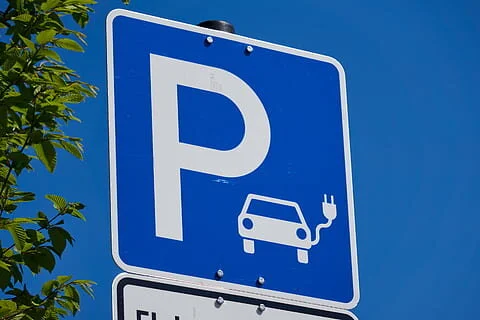
Soon after President Biden took office, he signed an executive order to replace all government vehicles (include USPS) with electric vehicles. Since then, President Biden has made efforts to increase electric vehicle charging infrastructure with large funding opportunities from the Department of Energy, among other government agencies. In the last month, President Biden pitched his $174 billion EV proposal in the heart of the car manufacturing industry in the United States—Michigan. In addition, Senate passed a $3.5 trillion budget framework on August 11, 2021, that includes funding to make EVs more affordable for consumers, including a public charging network and financial incentives.

EV Parking.jpg

Lowering greenhouse gas emissions relies not only on making EV charging infrastructure available but also on getting more EVs on the road. Consumer Reports analyzed EV production plans by vehicle producer, including big names like Ford Motor Company, Volvo, Honda, and General Motors. Among its findings: Jaguar plans to be all-electric by 2025, the United Kingdom will ban diesel- and gas-powered cars affective 2030, and General Motors will become completely carbon neutral by 2040. Individual companies setting targets, however, will not be enough for a timely fleet turnover—the International Energy Agency determined that governments will need to accelerate decarbonization policies to meet their climate goals, which will involve extensive upgrades to the transportation sector.

While EVs make up 4.6 percent of car sales around the world, and more than 20 countries have electrification targets or planned bans on internal combustion engines, in the United States there are no federal targets for EV sales. Instead, states have taken the lead and incentivize businesses and consumers to make the switch from conventional internal combustion engines to hybrid and battery-operated EVs. As consumer demand for EVs increases over time, auto manufacturers must abandon the idea of EVs being a “small niche market” to promote turnover of combustion engines, facilitate meeting climate goals, and to achieve the target of half of all new domestic vehicle sales being electric by the end of this decade.

Sagal
Alisalad
Assistant Researcher

Myisha Majumder
Research Assistant


This is a part of the AEC Blog series

tags: Sagal Alisalad, Myisha Majumder
Friday 08.13.21
Posted by Guest User
 

Gas Utilities Explore Hydrogen as a Decarbonization Strategy

To meet state and local climate goals, gas utilities across the United States are looking towards alternative fuel sources such as hydrogen and biogas—also referred to as renewable natural gas (RNG)—to decarbonize their future gas supply. Along with maximizing energy efficiency and making further investments in gas infrastructure, recent planning documents from gas utilities like National Grid and Washington Gas highlight a shift towards low and zero-carbon fuels such as RNG and hydrogen.

Image Source: Strategy&

Image Source: Strategy&

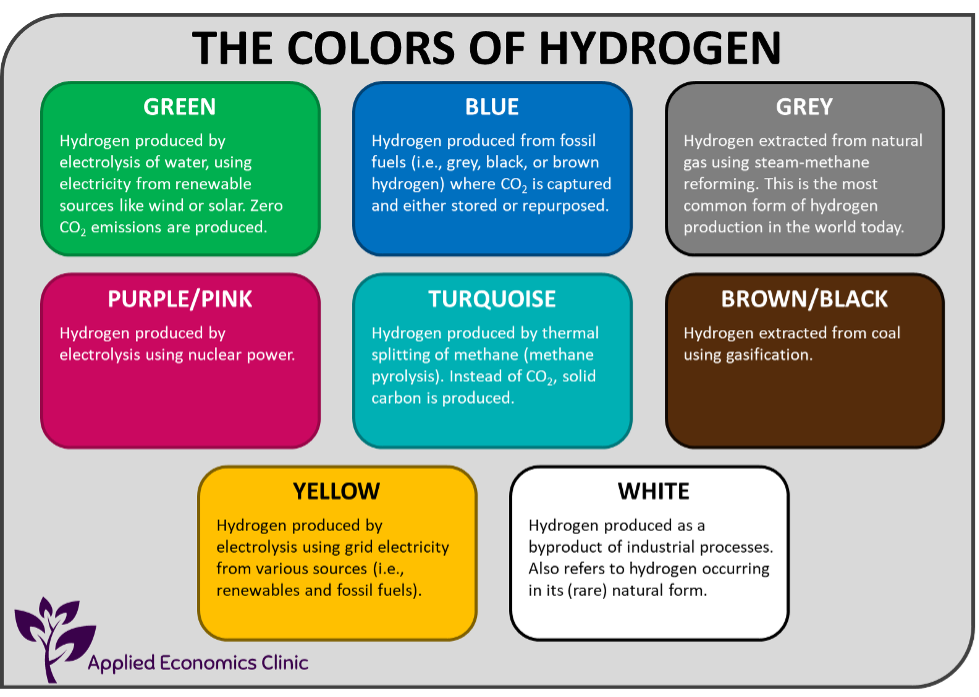
Hydrogen is not an energy source itself; it is an energy carrier. There are several types, or “colors”, of hydrogen that are distinguished by the energy source and process used to produce it. “Green” hydrogen—which is produced through electrolysis of water using electricity from renewable sources such as wind or solar—releases zero greenhouse gas emissions when burned for energy. Green hydrogen itself is not a zero-emission fuel source: If leaked directly into the atmosphere green hydrogen is an indirect greenhouse gas and its combustion has been found to emit nitrogen oxides (NOx), which is a criteria air pollutant. Since it can be mixed with fossil-sourced gas, green hydrogen is attractive to gas utilities who want to continue to use their existing gas pipelines while attempting to comply with climate mandates. 

Several economic, technical, and infrastructure barriers stand in the way of using green hydrogen in decarbonization:

  • Green hydrogen is more expensive than its dirtier counterparts (e.g., hydrogen made using fossil fuels), fossil fuels themselves, and grid electricity.

  • Hydrogen production is inefficient. The International Renewable Energy Agency estimates that 30 to 35 percent of its energy is lost during electrolysis.

  • Hydrogen poses a risk to public safety. Hydrogen molecules are more likely to leak through pipeline imperfections and escape existing gas pipelines; hydrogen can also degrade the materials used for pipelines.

  • Due to insufficient infrastructure, and regardless of demand, hydrogen could only be injected into existing gas pipelines to make up 5 to 15 percent of total gas volume.

Even if these barriers could be overcome, an important question remains: Is the production of green hydrogen the best use of renewable resources?

Electrification, or the replacement of fossil-fuel dependent technologies (like gas and oil heating systems or gasoline-powered motor vehicles) with those that rely on electricity, is an alternative decarbonization method gaining traction across the United States. When sourced from renewables, heating our homes with electricity rather than gas or gas mixed with hydrogen, can significantly reduce emissions without the safety concerns of piped gas and costly infrastructure upgrades needed to make hydrogen work.

As the United States works towards electrifying sectors throughout the economy, the demand for electricity, and subsequently the demand for renewables, will rise. The use of green hydrogen as energy storage in time periods when the supply of renewables exceeds electric demand may be a viable option worth comparing to other storage technologies, but maintaining and improving costly gas delivery infrastructure is far less likely to make sense economically or socially.

Tanya Stasio Researcher

Joshua Castigliego Researcher


This is a part of the AEC Blog series

tags: Joshua Castigliego, Tanya Stasio
Wednesday 08.04.21
Posted by Guest User
 

A Better Way to Finance Decarbonization

Congress is currently debating the fate of President Biden’s twin infrastructure packages. One proposal—the fate of which remains to be determined—is the $300 billion in so-called “Clean Energy Tax Credits” over ten years. That provision alone would be the one of the largest single green appropriations in U.S. history. However, it is not nearly enough to meet the challenge of decarbonization. A relatively conservative estimate by University of Massachusetts-Amherst economist Robert Pollin suggests the United States would need to invest 2 percent of economic output per year in decarbonization efforts from both private and public sources between now and 2050 in order to limit temperature increases to 1.5° Celsius above pre-industrial levels. That is over $400 billion in 2021 alone. And that pace would have to continue every year regardless of who the President is or which party controls Congress.

Raising this money through congressional appropriation is not promising. In the 2010s, multiple government shutdowns occurred because a divided Congress could not pass budget bills. Climate policy in the United States is uniquely vulnerable to rapid swings between administrations that deny and recognize climate change. And a combination of harsh budget rules and an insistence that investment packages be paid dollar-for-dollar in tax increases or spending cuts disadvantages large increases in public spending. Finally, the Senate in particular can only pass a limited number of spending bills with a simple majority of 51 senators; all other legislation require a supermajority of 60 Senators to agree before a bill can move forward.

Image 2.JPG

The situation is not, however, hopeless. The federal government has tools to ensure significant on decarbonization even if Congress does not act every year. In a previous post, I argued for green banks which could raise private funds with a small amount of public capital. Congress could also make green spending “mandatory,” which would automatically authorize the federal government to spend money on designated climate programs. This tool is successfully used for other critical programs like Social Security and Medicare and protects the spending Congress does authorize from future volatility in the budget process. Finally, the Federal Reserve could extend a permanent credit line to states, municipalities, and regional agencies that issue “green bonds.” The Federal Reserve would agree to purchase any bonds that private investors do not at prices that would ensure low interest rates to issuers. If the terms are not generous, local governments will not take up the offer, as we saw with the Fed’s Municipal Liquidity Facility during the pandemic. In addition, such a scheme would require a “green ratings” agency or process to protect against greenwashing.

If done strategically, these tools could ensure hundreds of billions—even trillions—of dollars are reliably spent on decarbonization each year. The United States could exceed its own green spending targets and invest in additional capacity to help other countries decarbonize faster. But to do that, policymakers and activists have to think strategically about green finance. Too many excellent climate programs rely too much on congressional appropriation—a process that gives fossil fuel interests an annual opportunity to scuttle progress, too easily results in vetoes of ambitious spending plans, or unnecessarily conditions them on tax increases. These proposals also fail to consider how rare it is for the Presidency and both houses of Congress to be controlled by the same party. When progress does become possible in Congress, it happens in sudden waves like the Obama-era Recovery Act or the Biden-era American Jobs Plan. Despite the size of these spending bills, their green provisions are too small relative to what is necessary to meet climate targets. Decarbonization is too important for that. Institutions that sustain high levels of green investment independently of Congress are the solution.

Professional+Headshot+--+Chirag+Lala+(1).jpg

Chirag Lala Researcher


This is a part of the AEC Blog series

tags: Chirag Lala
Monday 07.26.21
Posted by Guest User
 

Atmospheric Carbon Continues to Climb

Sixty-three years ago, scientists began measuring the concentration of carbon dioxide in the atmosphere at a weather station perched atop the approximately 13,700-foot Mauna Loa volcano in Hawaii—daily measurements that have continued ever since. The Mauna Loa Observatory record of carbon dioxide measurements are called the “Keeling Curve” (see chart below), which is named after Charles David Keeling, the scientist who began tracking carbon dioxide levels at Mauna Loa in 1958. The Keeling Curve serves as a global benchmark for atmospheric carbon levels steady march upward.

graph1.png

The adoption of the Paris Climate Agreement, emission reduction pledges by governments and private companies, the COVID-19 pandemic: none of these recent impacts on global emissions is yet visible in the Keeling Curve, and emission reductions on this relatively small scale may not be enough to slow down rising atmosphere concentrations. Atmospheric carbon levels in 2021 are approaching 420 parts per million, the highest since measurements began more than 60 years ago. The last time concentrations were this high was between 4.1 and 4.5 million years ago, when sea level was about 78 feet higher than it is today and the average global temperature was about 7°Fahrenheit (F) warmer than pre-industrial temperatures (for reference, observed global warming to-date is about 1°Celsius (C) or 1.8° F above pre-industrial temperatures).

Despite decades of climate negotiations, despite climate commitments from the public and private sectors, despite an unprecedented global pandemic, despite the increased occurrence of, and increasingly extreme, weather events around the world (see image below from Verviers, Belgium after heavy rains and floods across western Europe in July 2021)—growth in atmospheric carbon concentrations has not slowed, stopped or reversed.

The scale of action needed is daunting: to limit global warming to no more than 1.5°C (the threshold required by the Paris Climate Agreement), global carbon emissions need to fall off a cliff (see chart below, reproduced from Carbon Brief).

graph2.png

As of 2019, global emissions would need to fall by about 15 percent per year through 2040 to reach the 1.5°C target.  Every year that passes without a decline in global carbon emissions serves to increase the rate at which emissions must decline to have any hope of achieve the 1.5°C target. There is no time to waste—immediate drastic action must be taken to reduce global emissions. Fortunately, we already have many of the tools and technologies needed to do so, like renewable wind and solar.

Dr. Bryndis Woods Senior Researcher


This is a part of the AEC Blog series

tags: Bryndis Woods
Wednesday 07.21.21
Posted by Guest User
 

The Urban Heat Island Effect and Equity

A recent study published in Nature Communications found that Black, Indigenous, and People of Color (BIPOC) are disproportionately in census tracts with higher heat island intensity. Heat islands are defined as areas that experience higher temperatures than the surrounding areas. This is often in urbanized areas with large infrastructure, like buildings and roads, that lead to an increased sunlight intensity. In contrast, areas that are more suburban or rural have more green space, which helps with cooling temperatures.

Bloomberg’s CityLab reported that access to green space in cities is directly related to income and higher education, both of which are, in turn, associated with an increase in green space. The Nature Communications study found that in 169 of the 175 urban areas analyzed disparities in heat island effects were dependent on race. A higher exposure to heat leads to drastic health outcome, which already disproportionately impact marginalized communities. Heat impacts pre-existing conditions, like heart and lung disease, diabetes, and asthma.

anthony-delanoix-VDS8ASoyzjw-unsplash.jpg

In the hottest parts of Boston and its adjacent cities (Chelsea, Everett, and Somerville), daily temperatures can be 20 to 50 degrees hotter than nearby suburban areas that have more tree and vegetation coverage—like Melrose, Arlington, Newton, and Brookline. Building colors and types of infrastructure also play a major role in the heat island effect: dense urban areas with an aging housing stock and multi-story buildings, often made of brick and stone, retain heat collected throughout the day. While replacing asphalt with rubberized surfaces on children’s playgrounds is beneficial in preventing injury, black or dark blue playground surfaces can heat up to about 96 degrees on a sunny day in the mid-70s. While some cities are investing in long-term cooling plans, there are some setbacks. For instance, the City of Chelsea planted 2,000 trees between 2013 and 2017, but roughly 30 percent of the trees died within a year of planting. This is partially due to methane gas distribution system leaks nearby the affected trees.

Urban heat islands are often a result of racist systemic practices, such as redlining (where neighborhoods and communities are denied services as a result of racially discriminatory practices) and underfunding of marginalized communities. A study in the journal Climate found that 94 percent of the cities studied had higher land-surface temperatures in formerly redlined areas compared to non-redlined areas. To this day, Boston is still quite segregated, and like other cities in the United States, urban heat islands are strongly correlated with public disinvestment and systemic racism.

sagal.jpeg

Sagal
Alisalad
Research Assistant

Myisha Majumder
Research Assistant


This is a part of the AEC Blog series

tags: Sagal Alisalad, Myisha Majumder
Wednesday 07.14.21
Posted by Guest User
 

Repeating History: 'Climate Injustice’ in United States

In 1995, a heatwave in Chicago in July killed more than 700 people in five days—the most devastating climate disaster in Illinois history. State authorities explained that the high fatality rate was due to an inadequate local heat warning system, lack of ambulance services, and an aging population in urban areas. Analysis by Eric Klinenberg, author of Heat Wave: A Social Autopsy of Disaster in Chicago, however, points to causes more closely related to social equity. Klinenberg’s map of heat-related deaths in Chicago matches the distribution of poverty and urban abandonment. The 2018 documentary film, Cooked: Survival by Zip Code highlights a surprisingly close correlation between heat wave deaths and areas that are food deserts and have a high incidence of gun-related crimes, diabetes, breast cancer, unemployment, and heart disease, and low high school completion rates.

Chicago’s social disaster of 25 years ago is still repeating itself today. According to a recent study published in the journal Nature Communications, heat stress—a significant risk to public health—is unequally distributed across income groups in major U.S. cities. More people of color live in places with little green space and lots of driveways, buildings, and blacktop.

Due to the urban heat islands effect, cities with more than a million people are about 1.8-5.4°F (1-3°C) warmer than average and in the evening, cities can be 22°F(12°C) warmer than the surrounding areas. Humid regions and cities with denser populations experience the most significant temperature differences. Urban heat islands form as a result of several factors: 1) Hard, dry surfaces like sidewalks and roofs in urban areas provide less shade and moisture than natural landscapes; 2) heat is generated from human activities such as vehicles, A/C, and industrial facilities; and 3) the spacing of buildings influences wind flow and release solar energy. The urban heat island effect is not just about temperature but more about human health, well-being and quality of life. Dense residential areas and industrial zones paved with asphalt absorb and radiate solar energy while large parks and green spaces cool down the surrounding areas.

Figure 1. Baltimore Heating Map

Figure 1. Baltimore Heating Map

According to the joint research by NPR and University of Maryland’s Howard Center, three-quarters of the 97 most populous U.S. cities show that areas with higher temperatures were more impoverished. In other words, low-income households in large cities are more exposed to heatwaves than wealthier households as global warming accelerates. The heat mapping project at Portland State University also shows that the temperature can vary as much as 20°F across different parts of the same city. For example, in Baltimore, rowhouse areas where many low-income families live are hotter, and the residential regions around parks are relatively cool, resulting in a temperature difference of more than 10°F (see Figure 1).

Measures to reduce climate injustices associated with urban heat islands are a growing area of urban policy and planning. Baltimore’ ‘B’more Cool’ project, launched in 2014, works to improve our understanding of urban heat islands and identify ways to reduce their impacts. With the collaboration of scientists, urban designers, city officials and local community groups, Baltimore has installed cool roofs, replaced vacant lot spaces with community green spaces, and opened more cooling centers to improve community resilience. Washington D.C. has a goal to cover 40 percent of the city with the tree canopy and the Portland city council has proposed new requirements to limit the amount of pavement and asphalt-covered area. Although programs like these will take some time to reduce urban heat island impacts, their existence is a positive step towards addressing critical social equity concerns.


Jimin Kim Communications Assistant


This is a part of the AEC Blog series

tags: Jimin Kim
Friday 07.09.21
Posted by Guest User
 

The Inequality of FEMA Aid

tanya.jpg

As the world’s temperatures rise, extreme climate events like severe heat, wildfires, and flooding, are occurring more frequently. These events can have a devastating and costly impact on the communities affected.

The purpose of the Federal Emergency Management Agency (FEMA) is to help communities hard hit by disaster by providing aid to rebuild and prevent future damages. Unfortunately, a 2019 NPR investigation revealed that the federal disaster aid disbursed by FEMA disproportionately favors the white and wealthy, regardless of need.

The investigation found that after a disaster Black households’ wealth declined on average while white residents grew wealthier. Part of the reason behind this disparity lies in FEMA’s cost-benefit calculations, which are designed to minimize taxpayer risk. Residents that own their own homes receive more aid, residents that have high incomes can claim substantial tax refunds from the IRS (while the lowest incomes families can claim nothing at all), and residents that have good credit are more likely to secure loans to rebuild. What happens next is a faster recovery for affluent neighborhoods and a sluggish recovery for communities in need.

In addition, programs like the FEMA buyout program, provide opportunities specifically for homeowners. The buyout program allows homeowners to volunteer to sell their homes to FEMA: providing them with funds to relocate. FEMA then converts the land for use in reducing future disaster risk (e.g., creating a green space to reduce flood risk). These buyouts are awarded in predominately white neighborhoods where more families own their homes.

Low-income and communities of color face a disproportionate burden when it comes to the impacts of climate change. Aid from organizations and agencies like FEMA should be designed to help the communities that need it most. Federal policy can exacerbate existing wealth and race disparities in the United States, or it can help to right historical wrongs. Including equity considerations in aid calculations will balance the scales and ensure that the communities that are hardest hit by extreme climate events receive their fair share of aid, regardless of their income, credit background, or property-ownership status. 

Tanya Stasio Research Assistant


This is a part of the AEC Blog series

tags: Tanya Stasio
Tuesday 07.06.21
Posted by Guest User
 

Energy efficiency is not a “dwindling” resource

A 2018 paper by Amory Lovins at the Rocky Mountain Institute argues that economic models wrongly identify “energy efficiency”—using less energy to power the same activities—as a limited and dwindling resource. Current models assume that once a certain amount of energy saving is achieved, the potential for further savings diminishes. It is a common misconception that remaining energy savings can only be achieved at ever high costs when in fact there remain ample opportunities for energy efficiency and peak reduction in homes and offices, through both passive and active measures.  

Lovins argues that the premise of dwindling energy efficiency is mistaken on two counts. First, additional savings from energy efficiency do not have to come just from new products like better air conditioners. Additional savings can come from “artfully choosing, combining, sequencing, and timing fewer and simpler widgets to achieve bigger savings and more co-benefits.” This approach—which Lovins dubs “integrative design”—is also cheaper.

Lovins offers numerous examples of the integrative approach in action for buildings:

  • Timing deep retrofits to coincide with planned renovations of HVAC systems and glazing can achieve larger savings with smaller capital expenditures.

  • Buildings can achieve greater energy savings without additional technologies being purchased if they optimize daylighting, airflow, heat transfer, and other similar factors.

  • A 2013 paper by L.D. Danny Harvey at the University of Toronto found that meeting the Passive House Standard—which sets temperature, load, and comfort standards on buildings—achieves a reduction in heating load by a factor of 5 to 10 for an additional cost that ranges from 0 to16 percent of the construction costs of a reference building.

image (2).png

Apart from Lovins’ examples of more passive measures, there is substantial untapped savings from more aggressive building retrofits. The American Council for an Energy-Efficient Economy (ACEEE) argues for mandatory building performance standards as a powerful policy tool for energy and emission reductions. ACEEE states that given the current pace of energy efficiency upgrades, it will take more than 500 years to retrofit all U.S. housing and more than 60 years to retrofit commercial buildings. It offers several examples of building performance standards that have been successfully implemented—including in Tokyo, Japan and Boulder, Colorado.

A recent study released by the U.S. Department of Energy (DOE) lays out a policy framework for buildings to actively interact with the electric grid through smart technology, and thus reduce energy usage and shift demand away from peak hours. The study incorporates passive and active measures. One example is shifting demand by having grid-connected water heaters pre-heat during off-peak hours. DOE also recommends that building codes should be adapted to incorporate such demand-shifting measures and facilitate these types of communication between buildings and the grid.

In addition to updating regulations and building codes, policymakers can alter fiscal rules to institutionalize regular active and passive efficiency upgrades as a key goal of public investment and procurement. One possibility is to allow public spending on efficiency upgrades to proceed without offsetting increases in tax rates since the benefit of that spending is a reduction in future

Professional+Headshot+--+Chirag+Lala+(1).jpeg

Chirag Lala Research Assistant

2017%2BHeadshots_002.jpeg

Tyler Comings
Senior Researcher


This is a part of the AEC Blog series

tags: Tyler Comings, Chirag Lala
Friday 07.02.21
Posted by Guest User
 

Energy efficiency: The Key to Growth and Climate Stabilization

Can economic output (called “gross domestic product” or GDP) and population continue to increase while greenhouse gas emissions fall? This phenomenon is known as “absolute decoupling”—economic growth is “decoupled” or operating separately from emissions growth—and is a difficult goal. Most countries have achieved the more modest goal of “relative decoupling,” in which GHG emissions grow more slowly than GDP or population growth. Global emissions likely peaked in 2019, but will need to fall by a consistent 6 percent per year (or more) until 2050 to successfully limit warming to just 2° Celsius. (Limiting warming to 1.5°C would require 10 percent emission reductions per year.) The United States’ emissions peaked in 2007; since then, annual emissions have been lower even as GDP grew (absolute decoupling). But the United States still sees occasional increases in emissions from one year to the next even if total emissions has stayed below 2007 levels.

To offset the nation’s own historical contribution to atmospheric greenhouse gas levels, the United States needs to accelerate the annual pace of emissions reductions and to make time for lower and middle-income countries to invest in steep reductions of their own.

Investments in reducing global energy use are a critical part of making both global and U.S. emissions reductions happen. Energy efficiency improvements reduce the amount of energy required to do the same activity (energy efficiency is not the same as energy conservation, which involves cutting back on activities or consumption). Energy efficiency improvements permit economic growth to continue while energy use and emissions decline. Between 1980 and 2014, U.S. GDP grew by 149 percent, while energy usage only grew by 26 percent. Data from the U.S. Energy Information Administration show that U.S. energy consumed per dollar of GDP fell consistently over the past two decades and projections suggest that it will likely continue to fall.

CHIRAG.png

Globally, GDP rose 84% from 2000 – 2017, while energy usage only rose 38 percent; 40 percent of the energy saved came from using less fossil fuels for power generation while the rest came from reductions in energy requirements for final uses. The energy savings from reduced coal and gas use both equaled 10 percent of 2017 global demand for coal and gas respectively.

Further energy efficiency improvements could build on this global relative decoupling of energy use and GDP. As shown in this figure from a paper in the Journal of Energy and Environmental Science, energy efficiency (top left in light grey) reduces energy demand, meaning less new renewable generation is needed to produce 100 percent of electric demand. As energy consumption declines, fossil fuel generation will retire.

CHIRAG22.png

A joint-study by the Center for American Progress and the Political Economy Research Institute argued that it is possible to lower U.S. energy consumption to 30 percent of 2010 levels in 20 years, all while continuing economic and population growth. Similarly, the American Council for an Energy Efficiency Economy estimated in 2015 that large and cost effective energy efficiency improvements could reduce energy usage by 40-60 percent relative to current forecasts. The United States also has a higher energy use per dollar of GDP than most European countries, which suggests additional room for improvement using existing technologies. Policies to implement these reductions are an important part of any serious climate strategy.

Chirag Lala Research Assistant


This is a part of the AEC Blog series

tags: Chirag Lala
Tuesday 06.29.21
Posted by Guest User
 

The "Colors" of Hydrogen

The appropriate role of hydrogen in achieving global climate goals—especially in hard to decarbonize sectors—is an important area for consideration in today’s climate plans. Although hydrogen itself is a zero-emission fuel, it can result in substantial upstream greenhouse gas emissions depending on the method used to produce it.

Hydrogen is an energy carrier, not an energy source. Hydrogen is produced from an energy source through various processes such as electrolysis, steam methane reformation, or gasification using either fossil fuels directly or electricity produced from renewables, fossil fuels or nuclear. Not all methods of hydrogen production are equal when it comes to climate impacts. Several categorization systems exist to distinguish between hydrogens made from different fuel and electric sources. For example, the North American Council for Freight Efficiency (NACFE) categorizes hydrogen into different “colors” based on initial energy source and production process.

그림1.png

A 2018 policy briefing from the Royal Society reports that about 95 percent of global hydrogen production is sourced from fossil fuels including:

  • Grey hydrogen extracted from gas using steam methane reformation,

  • Brown/black hydrogen extracted from coal using gasification.

Other types of hydrogen are starting to gain traction as various industries work to decarbonize, such as:

  • Green hydrogen produced by electrolysis of water, using electricity from renewable sources such as wind or solar resulting in zero carbon emissions, and

  • Blue hydrogen produced from fossil fuels (i.e., grey, black, or brown hydrogen) where carbon dioxide is captured and either stored or repurposed.

The industry group that promotes hydrogen use produced a study suggests that a combination of green and blue hydrogen can meet the world’s hydrogen demand and be cost competitive compared to grey hydrogen (fossil gas derived hydrogen) by 2035.

Utilities across the United States (and around the world) claim that green hydrogen has an important role in decarbonizing their future gas supply and meet local and state climate goals. In theory, hydrogen could be injected into existing gas pipelines to make up a small percentage—5 to 15 percent—of the total gas volume.

The U.S. Congressional Research Service has found that major infrastructure upgrades will be needed before we see a higher share of hydrogen blended with conventional gas. Hydrogen molecules are smaller than methane and therefore more likely to leak through pipe imperfections and even permeate gas pipelines; hydrogen can also eat away at common materials used for gas pipelines.

Hydrogen may have a role in a decarbonized future, but there are substantial technological and infrastructure challenges to its use in heating and providing electricity. Hard to decarbonize processes or sectors (e.g., transportation, high-heat industrial equipment, etc.) may benefit the most from utilizing hydrogen to achieve greenhouse gas reductions.

Joshua Castigliego Researcher

Tanya Stasio Research Assistant


This is a part of the AEC Blog series

tags: Tanya Stasio, Joshua Castigliego
Thursday 06.24.21
Posted by Guest User
 

What role does “renewable natural gas” have in a clean energy future?

“Renewable natural gas” (also known as RNG, methane gas, or biogas) is used as a strategy by gas utilities to avoid closure due to the state and local carbon neutrality goals. While landfill RNG collection projects are becoming more common across the United States, RNG is, at best, a temporary solution to achieving emission reductions, and at worst results in environmental harms that could offset the benefits of reduced fossil fuel use. The focus for emission reduction plans should be placed squarely on electrification paired with renewable electric generation.

RNG is a gaseous byproduct of decomposing organic matter and can be used to fuel vehicles or generate electricity and heat. For years RNG, primarily from landfills, livestock operations and wastewater treatment, has been used to produce small amounts of electricity. More recently, large-scale landfill RNG projects used to supplement conventional gas have become more prevalent.

그림1.png

Although RNG extracted from landfills has the potential to lower greenhouse gas emissions, landfill RNG potential isn’t sufficient to produce enough biofuels to substitute for fossil fuels. The technical potential for U.S. landfill gas is 1 Bcf per day (two-thirds of the total RNG potential in the United States), which is insignificant compared to the current U.S. gas consumption of 82.9 Bcf per day. Landfill RNG would need to be supplemented with RNG extracted from dedicated farmland. A paper published by Yale Economics concluded that the large-scale and destructive agricultural expansion needed to produce farmland RNG could negate its environmental benefits by endangering the forests it replaces. Farmland RNG production also requires a large amount of freshwater use, and a study published in Ecological Economics found that farmland RNG expansion would require freshwater needed for food production. These negative environmental impacts have the potential to offset the benefits of landfill and livestock RNG (preventing manure runoff into water supplies, reducing methane emissions). Despite these drawbacks, RNG is promoted by gas utilities as a viable alternative to electrification because of its purported ability to reduce emissions while keeping gas utilities’ business model alive.

The electric grid must transition to zero-emission sources like wind, solar, and hydro to reach 2050 emission targets without the negative land-use impacts that come with farmland RNG production expansion. A study from UC Davis found the total RNG potential in California could only provide 4.1 percent of the state’s conventional gas demand, meaning RNG cannot replace gas without importing substantial materials from out of state. A report from the Union of Concerned Scientists came to a similar conclusion for both California and the United States with regard to RNG transportation fuel..

Renewables like wind and solar are among the cheapest energy sources, making them the focal point of renewable energy infrastructure planning. There is little potential for RNG to reduce emissions at the same cost and scale as electrification resources.

Eliandro Tavares Assistant Researcher


This is a part of the AEC Blog series

tags: Eliandro Tavares
Tuesday 06.22.21
Posted by Guest User
 

Juneteenth – Continued Support for Racial Justice

Last year, during the height of a pandemic that disproportionately impacted marginalized populations, a wave of calls and actions against racial inequity was renewed. AEC stood in solidarity with demands for racial justice then and continues to do so now. Though the movement has sustained momentum, it is imperative that we recognize not only the continued injustices committed in the last year, but that these injustices have deep systemic roots.

Juneteenth, a holiday marking the official emancipation of slaves on June 19, 1865, was declared a state holiday in Massachusetts last year, after widespread calls for concrete recognition. Other states had done the same prior to 2020, including Hawaii, North Dakota, and South Dakota. Beyond this, many private corporations have incorporated Juneteenth into their calendar, either through giving a day off or taking a moment of pause to recognize the painful racial history of the United States.

Environmental justice and racial justice go hand in hand. Black communities disproportionately suffer from several environmental harms including proximity to industrial facilities, power plants, and hazardous sites, exposure to emissions, and the effects of natural disasters. Due to these disparities, the Environmental Justice Movement is rooted in black history.

This Juneteenth, we at AEC want to recognize the Black Americans that are fighting for environmental justice across the United States. A recent web article by the global environmental organizing campaign Greenpeace calls out eight Black activists and their organizations for their work fighting environmental injustices:

·      Savonala “Savi” Horne: Executive Director of the Land Loss Prevention Project, an organization that provides legal assistance to Black farmers and landowners in North Carolina in danger of losing their land.

·      Chantel Johnson: Founder of Off Grid in Color (OGIC), an organization that fosters self-sufficiency in communities of color.  

·      Tanya Fields: Founder of the Black Feminist Project which centers on food justice, and economic development for underserved woman and youth of color.  

·      Rue Mapp: Founder of Outdoor Afro, Rue works to provide Black communities with opportunities to connect with nature and the black history tied to natural areas in the United States.

·      Christopher Bradshaw: Founder of Dreaming Out Loud, an organization that strives to improve economic opportunity and access to education and a healthy environment for marginalized communities. 

·      Peggy Shepard: Co-Founder of WE ACT for Environmental Justice which addresses environmental protection and environmental health policy, particularly for low-income communities and communities of color.

·      Jeaninne Kayembe: Co-Founder of The Urban Creators, an organization that utilizes food, art, and education to nurture resilience in the local community.  

·      Omar Freilla: Founder of Green Worker Cooperatives, Omar works with worker-owned green businesses to support the local economy while prioritizing democracy and environmental justice.

Our thanks to these activists and to BIPOC-led organizations for driving campaigns to depend environmental resources and the human communities that live in and rely on them. For more resources on the intersection of equity, race, the BLM Movement, and the environment, visit our resources page.


Tanya Stasio Research Assistant

Myisha Majumder
Research Assistant


This is a part of the AEC Blog series

tags: Tanya Stasio, Myisha Majumder
Thursday 06.17.21
Posted by Guest User
 
Newer / Older