• Home
  • About
    • Our People
    • Mission and Funding
    • 990 Filings
    • Governance and Disclosure Statements
  • Our Work
    • Publications
    • Newsletters
    • Equity Resources
  • Blog
  • Jobs
    • Internships
    • AEC Fellowship
    • Careers
  • Pro Bono Fund
    • Pro Bono Fund
    • Donate
    • MassCEC Empower Grant
Applied Economics Clinic
  • Home
  • About
    • Our People
    • Mission and Funding
    • 990 Filings
    • Governance and Disclosure Statements
  • Our Work
    • Publications
    • Newsletters
    • Equity Resources
  • Blog
  • Jobs
    • Internships
    • AEC Fellowship
    • Careers
  • Pro Bono Fund
    • Pro Bono Fund
    • Donate
    • MassCEC Empower Grant

The Intersectional Implications of Illegalizing Abortion

The life-threatening and life-altering consequences of abortion bans are not limited either to woman-identifying or to cis individuals. Overly simplistic binaries like male and female or man and woman leave out the 12 percent of U.S. transgender men and nonbinary individuals who experience pregnancy and the 21 percent of pregnant trans and nonbinary people who receive abortions—higher than the overall 18 percent of all pregnant people nationwide who receive abortions. Not only do rigid gender binaries ignore the unique barriers and obstacles faced by pregnant trans and nonbinary people, but they also ignore race-based inequities in maternal health outcomes wherein Black and Indigenous people have a maternal mortality rate up to 3 and 4.5 times the rate for white people, respectively.

Recent research from the National Institutes of Health also reveals that disabled people face 11 times the risk of death during pregnancy compared to their nondisabled counterparts. Research in the journal Social Science and Medicine finds that among pregnant immigrants, undocumented patients are among the least likely to receive prenatal care; consequently, a 2007 study in the Journal of the American Medical Association finds that among Emergency Medicaid recipients—99 percent of whom are undocumented—childbirth and pregnancy complications accounted for 82 percent of all spending and 91 percent of all hospitalizations.

In the case of forced pregnancies due lack of access to a medical abortion, the resulting mortality will disproportionately affect trans, Black, Indigenous, disabled, and undocumented pregnant people. Research published in Duke University Press predicts that, under an abortion ban, overall maternal mortality is expected to increase by 21 percent and Black maternal mortality will skyrocket by 33 percent.

Given that low-income women are 3 times more likely than wealthier women to experience an unintended pregnancy, the deaths and other harms associated with forced pregnancy will fall along stark class-based lines.

Source: Reproduced from University of California, San Francisco (UCSF) Medical Center, Bixby Center for Global Reproductive Health. 2018. Socioeconomic outcomes of women who receive and women who are denied wanted abortions. Advancing New Standards in Reproductive Health (ANSIRH). Available at: https://www.ansirh.org/sites/default/files/publications/files/turnaway_socioeconomic_outcomes_issue_brief_8-20-2018.pdf

A landmark 2018 study conducted by researchers at the University of California, San Francisco finds that over half of all U.S. abortion-seekers live below the federal poverty level and over three-quarters do not have enough money to cover their own basic living expenses. The most common reason given for wanting to terminate an unwanted pregnancy is not having enough money to care for a child or support another one. People who are denied abortions are more likely than those who receive an abortion to become enrolled in public safety net programs like TANF, SNAP, and WIC, and are 3 times more likely to be unemployed six months later. People denied abortions are more likely to raise children as a single parent compared to those who receive abortions and are also more likely to be unable to afford their own basic needs.

The UCSF study results also suggest that forced childbirths impose significant financial duress on pregnant people, particularly for low- and moderate-income people and those in precarious economic situations; follow-up research by the National Bureau of Economic Research confirms that being denied an abortion creates significant and persistent financial burdens. It is disproportionately low-income people who will suffer the most—not just physically, but also economically—under an abortion ban.

The data are clear: The struggle for reproductive rights goes beyond a struggle for women’s rights. Reproductive justice is justice for transgender and nonbinary people, Black people, for Indigenous people, for disabled people, for undocumented people, for poor people, and for all people engaged in the struggle for bodily autonomy.

Sachin Peddada

Assistant Researcher


This is a part of the AEC Blog series

tags: Sachin-Peddada
Thursday 07.07.22
Posted by Liz Stanton
 

It’s Getting Hot in Here: Impacts of Drought

Reproduced from: National Oceanic and Atmospheric Administration. 2022. “Drought Monthly Outlook.” Data Snapshots. Available at: https://www.climate.gov/maps-data/data-snapshots/data-source/drought-monthly-outlook

This Summer, as temperatures rise and precipitation decreases or remains unchanged, much of the western half of the Lower 48 is at high risk for intense drought. According to the National Oceanic and Atmospheric Administration’s (NOAA) monthly drought outlook, conditions are forecasted to improve or stay the same on the Atlantic coast and parts of the Great Plains and Pacific Northwest regions due to below-normal temperatures and above normal precipitation through June 2022, but while conditions in the rest of the continental United States worsen.

Persistent or worsening droughts can cause decreased streamflow, dry soils, and large-scale death of vegetation. These conditions increase the potential for wildfires that spread more rapidly, burn more severely, and are more costly to suppress. Based on the National Integrated Drought Information System’s (NIDIS) recommendations, prescribed burns can reduce the potential for wildfires by thinning the amount of vegetation available to ignite. However, with this method, local air quality deteriorates severely. In regions with large swaths of farmland that are vulnerable to wildfires, like the San Joaquin Valley in California, poor air quality from agricultural burns is particularly harmful for residents’ respiratory health. While wildfire prevention and coordinating evacuations are crucial in drought conditions, there is a long-term need to consider how the related damage to air quality will affect millions of people this Summer and in the coming decades.

Sagal Alisalad

Assistant Researcher


This is a part of the AEC Blog series

tags: Sagal Alisalad
Wednesday 06.22.22
Posted by Liz Stanton
 

Energy Burden Transparency in the Housing Market

Reproduced from: Sussman, R., Bastian, H., Conrad, S., Cooper, E., Tong, E., Sherpa, A. and Porfalatoun, S. 2022. Energy Labels Affect Behavior on Rental Listing Websites: A Controlled Experiment.  American Council for an Energy-Efficient Economy. Available at: https://www.aceee.org/sites/default/files/pdfs/b2204.pdf

Low-income households face disproportionately higher energy burdens compared to households with higher incomes, in part because low-income housing tends to be more energy inefficient (i.e., relying on old heating systems, poor insulation, and less efficient appliances). 

A recent study by the American Council for an Energy-Efficient Economy (ACEEE) found that renters are more likely to choose apartments with better energy scores (a measure of building energy efficiency that ranges from 1 to 10) when energy score information is provided. For example, those looking for rental units at or below $750 per month were willing to pay 1.5 percent more in rent (about $11 more) for a one point increase in energy score.

Apartments with high energy scores save tenants money and reduce their energy burden through cheaper energy bills. Encouraging landlords, or even better, requiring them to transparently report energy costs in rental listings, would allow renters to make informed decisions, reducing energy burden for low-income households and increasing energy savings in the process.

Tanya Stasio

Researcher

Jordan Burt

Research Assistant


This is a part of the AEC Blog series

tags: Tanya Stasio, Jordan Burt
Thursday 06.16.22
Posted by Liz Stanton
 

Segregation, Migration, Displacement: The Dynamics of Gentrification in Boston

Source: Enwemeka, Z., Ma, A., and Datar, S. March 31, 2022. “Boston gets billions in home loans, but white areas get ‘much bigger piece of the pie.’” WBUR. Available at: https://www.wbur.org/news/2022/03/31/boston-home-lending-neighborhood-data

Gentrification is a process that unfolds in three stages: segregation, migration, and displacement. Until redlining was banned in 1968, Black communities in Boston and across the United States were legally segregated from white ones and structurally impoverished due to the economic legacies of chattel slavery. In the decades since the Fair Housing Act was passed, white people have begun to move into formerly redlined neighborhoods, taking advantage of relatively cheaper housing prices and a tenfold racial wealth gap, and claiming a disproportionate share of home loans. The influx of wealthier white residents into majority-minority communities drives up housing prices, pricing people out of their own neighborhoods.

In neighborhoods like Dorchester and Roxbury, where white residents claim two to three times their population share in home loans, the socioeconomic changes associated with gentrification are inextricably paired with notable shifts in racial demographics as communities of color struggle to keep up with the rising costs of living in their own neighborhoods.

There are clear signs of gentrification in Boston, and they’re hard to miss—they have “For Sale” written all over them.

Sachin Peddada

Assistant Researcher


This is a part of the AEC Blog series

tags: Sachin-Peddada
Thursday 06.16.22
Posted by Liz Stanton
 

Breaking Down National Responsibility for Climate Breakdown

Under a global economic system predicated upon endless growth on a planet with finite resources, there exists a fundamental contradiction between resources and wealth. While wealthy individuals in wealthy nations profit from the exploitation and overconsumption of the world’s natural resources, the rest of the world suffers the consequences.

Climate change has quickly evolved into a climate crisis. As acknowledged by world leaders such as the U.N. Secretary General, urgent, transformative action is required by the end of this year to avert utter catastrophe. The U.N. International Resource Panel estimates that overuse of natural resources is responsible for more than 90 percent of ecological destruction, biodiversity loss, and resulting human health damages. A recent study by economic anthropologist Jason Hickel published in The Lancet found that, as of 2017, the world economy consumes 90 billion tons of materials (including biomass, metals, minerals, and fossil fuels) per year, far exceeding the sustainable yearly limit of 50 billion tons of consumption set by the U.N. Industrial Development Organization and other industrial economists.

The Lancet study quantifies national responsibility for global excess material use, estimating that the United States and other high-income nations are responsible for 74 percent of global excess material use. While mean wealth per person in the Global North is more than six times that in the Global South, the South is left bearing 82-92 percent of the economic and social costs and 98-99 percent of deaths associated with climate change, according to Hickel’s recent research. The material benefits of resource extraction are realized in the North, while damages of that extraction are offshored to the South.

Hickel’s work reveals that central to this dynamic is unequal exchange, or an unfair trade balance, between the North and South. Today, unequal exchange results in a net extraction of value (in the form of labor, resources, and commodities) amounting to roughly $10 trillion each year, which is 30 times the amount of net aid the North sends to the South, in terms of global average prices. Hickel’s study also finds that, on average, people in the North consumed 27 tons of materials (water, food, and natural resources) in 2015, roughly four times the sustainable per capita consumption threshold of 7 tons of materials, based on a total resource consumption limit of 50 billion tons per year and a global population of approximately 7.3 billion in 2015. According to Hickel’s research, almost six-tenths of excess consumption in the North is made possible only by the extraction of value from the South.

The blame for the climate crisis, however, is not shared evenly by all individuals in all high-income countries. A complete understanding of climate accountability must include major domestic and transnational power structures and relations, such as class, race, gender, and indigeneity, which determine and affect the perpetrators, material impacts, and human tolls of environmental injustices. For instance, to imply that all residents of the United States are equally culpable for the nation’s ecological damages is to disregard the nation’s extensive history of settler-colonialism, Indigenous genocide, racialized slavery, and economic violence. All of these injustices continue to disproportionately harm minoritized and disenfranchised peoples within the United States in ecological, economic, and health outcomes.

For example, the U.S. food supply and distribution chain wastes 31 percent of all food that passes through it, while more than 10 percent of the U.S. population is food-insecure, consisting predominantly of poor, Black, Latine, and other marginalized children and adults. Moreover, communities situated near resource extraction sites, including pipelines, refineries, and mines, face staggering health disparities nationwide, including astronomical rates of cancer, asthma and chronic respiratory illnesses, and premature death, particularly—again—among low-income and racialized populations.

Both within and between countries, the global economic system produces different versions of the same hierarchies of inequitable ecological, environmental, and human harms; a privileged minority commit the greatest offenses and reap the greatest benefits, while the global masses suffer the worst of the consequences. According to a 2020 study from Oxfam International, the richest 1 percent of individuals worldwide—approximately 76 million people—now own twice as much wealth as the poorest 90 percent of the population, some 6.9 billion people. Research from the OECD shows that the world’s poorest residents suffer the worst effects of climate change.

Both the extreme wealth of the few and the suffering of the many are owed to the same root causes of resource exploitation and waste. Nature’s 2020 Scientists’ warning on affluence states clearly that the world’s wealthiest citizens are responsible for the most environmental harm and warns that the current system based on endless economic growth is not tenable.

To date, political and economic forces have fueled global society’s acceleration toward climate collapse, enabling a select minority to accumulate unprecedented levels of wealth at the expense of the majority—and of the planet itself. The world economy’s existing wasteful practices of resource extraction and oppressive hierarchies of wealth are unsustainable and incompatible with a healthy climate, and immediate, radical change is required to save the planet from disaster.

Sachin Peddada

Assistant Researcher


This is a part of the AEC Blog series

tags: Sachin-Peddada
Wednesday 05.04.22
Posted by Liz Stanton
 

Formerly Redlined Communities: A Legacy of Harm

Public policy can lead to profoundly positive or negative consequences that carry on for decades, and one primary example of a policy’s lasting impacts is the continuing environmental and public health harm experienced by formerly redlined communities. Redlining began in 1934, as the newly formed Federal Housing Administration (FHA) evaluated mortgage risks for lenders. FHA loan officers followed a grading system developed by the Home Owners’ Loan Corporation (HOLC) in which neighborhoods were rated from A (lowest mortgage risk) to D (highest mortgage risk).

HOLC used race as one of the guiding factors in assigning grades to neighborhoods, as neighborhoods with minority residents were often given the lowest rating and neighborhoods with white residents were given the highest. Minority neighborhoods, particularly Black neighborhoods, were frequently marked in red, representing a D rating. The red markups led to this exclusionary policy’s name: redlining.

Black mortgage applicants were largely denied mortgage loans and lines of credit due to their perceived high risk for defaulting on loans. The blatant racism embodied by this policy led to increasing racial segregation in cities across the country. Since they could not receive loans to move other neighborhoods, especially if it was a highly ranked and/or predominantly white neighborhood, people of color were largely pushed into neighborhoods with low ratings. The policy remained in effect until it was outlawed by the Fair Housing Act of 1968. However, the damage had already been done.

Eighty years later, many formerly redlined neighborhoods continue to experience a disproportionate share of environmental. Among these communities, 74 percent are predominately low to moderate income communities, and 64 percent are predominantly communities of color. Research indicates that the surface temperatures in formerly redlined neighborhoods are warmer than other communities, and they are exposed to higher levels of air pollution than those in neighborhoods previously given high ratings. Economic disparities also negatively impact these communities, as they tend to have lower home values, older housing stock, and lower rents in absolute terms than other neighborhoods. These neighborhoods tend to be located closer to industrial facilities and refineries, exposing them to higher levels of dangerous air pollutants such as nitrogen dioxide and fine particulate matter. New polluting projects, such as highways, were often placed close to, or even ran through, formerly redlined neighborhoods since land in the area was cheap.

The public health risks extend beyond respiratory conditions. Residents of formerly redlined neighborhoods tend to have shorter life spans, higher rates of diabetes, higher rates of hypertension, higher rates of kidney disease, higher rates of poverty than formerly high-rank neighborhoods. Residents are also twice as likely to visit an emergency room for asthma than those in other neighborhoods. One 2020 study found increased rates of premature births in New York City’s formerly redlined communities. Another team of researchers in Massachusetts found that living in formerly redlined neighborhoods posed a heightened risk of being diagnosed with late-stage lung and breast cancer than other neighborhoods and that formerly redlined neighborhood residents experienced a higher risk of late stage diagnoses overall regardless of age, sex, gender, race, or ethnicity.

It is evident that redlining policies implemented almost a century ago continue to impact millions of lives today through exposure to higher levels of pollutants and an increased risk of developing adverse health conditions. The harm caused by high levels of pollutants, and the risk of future harm, falls disproportionately on communities of color and low-income communities in cities around the nation. As the consequences of redlining continue to unfold, policymakers should carefully consider the short-term and long-term impacts on the environment and public health when reviewing existing policies or proposing new ones. Otherwise, policies implemented today risk further harming future generations.

Levi Bevis

Communications Assistant


This is a part of the AEC Blog series

tags: Levi Bevis
Wednesday 04.20.22
Posted by Liz Stanton
 

Zero Headroom for New Coal, Oil, or Gas Resources

On April 4, 2022, the Intergovernmental Panel on Climate Change (IPCC)—the leading world body for the assessment of climate change—released a report called “Climate Change 2022: Mitigation of Climate Change”. The report provides an update on global progress regarding the reduction of greenhouse gases and other mitigation measures that are necessary to avoid the most catastrophic impacts of climate change by limiting average global temperature increase to 1.5 to 2 degrees Celsius (as globally agreed in the Paris Agreement).

Let’s start with the good. The report finds that we already have the technology we need and the know-how to reduce emissions in line with globally-agreed goals: stop burning fossil fuels, deploy renewable energy resources, enhance energy efficiency, electrify heating and transportation, and save more forests. The price of renewable energy has dropped dramatically: between 2010 and 2019, solar and battery costs fell by 85 percent while wind costs fell by 55 percent. The reason for continued fossil fuel production, importantly, is not demand: “people demand services and not primary energy and physical resources per se” (emphasis added), which leads to the amazing conclusion that demand-side strategies could reduce 50 to 80 percent of emissions across all sectors. Some countries are on the right track: at least 18 nations have reduced their total emissions every year for more than a decade. Some of those are making annual emission reductions large enough that—if all other nations followed suit—would be enough to reach globally-agreed average temperature increase goals.

Image reproduced from: https://www.wri.org/insights/ipcc-report-2022-mitigation-climate-change

The not-so-good? The report finds that limiting global average temperature increase to 1.5 degrees Celsius is very unlikely: after the highest global emissions in human history every year for the last ten years, global emissions would need to peak within the next three years (by 2025) and fall by 43 percent by 2030, which would be historically unprecedented. Even then, the IPCC says it is “almost inevitable” that the 1.5 degree warming threshold will be exceeded, at least temporarily. To have any chance of limiting average global temperature increase to 1.5 to 2 degrees, the report emphasizes the need to rapidly phase out fossil fuels: by 2050, coal use must decline by 95 percent, oil use by 60 percent, and gas use by 45 percent. That means some fossil fuel resources would be shut down prematurely—i.e., before the end of their intended lifespan—which also means there is zero headroom for new coal, oil, or gas resources. The conclusion that the only way to limit catastrophic climate change is to ensure that no new coal, oil or gas development takes place has also been reached by the International Energy Agency.

The report’s results are both sobering and uplifting: readily available, affordable technology across the economy can reduce emissions in line with what is needed to avoid catastrophic climate change, but we are headed in the wrong direction. Major political changes are necessary to right our course.

Bryndis Woods, PhD

Senior Researcher


This is a part of the AEC Blog series

tags: Bryndis Woods
Thursday 04.14.22
Posted by Liz Stanton
 

Risks of Investing in Gas Going Forward

Across the United States, utility shareholders are looking to decarbonize their investment portfolios. Influential shareholder groups such as Vanguard, BlackRock, and Goldman Sachs, have signed on to the Net Zero Asset Managers Initiative, an international group of asset managers, that requires signatories to set climate goals in alignment with the Paris Agreement to ensure that global warming is limited to below two degrees Celsius. Signatories to the Net Zero Asset Managers Initiative commit to net-zero greenhouse gas emissions by 2050, as well as to investing in companies that align with this goal. Moreover, in accordance with the Paris Agreement, the Biden administration recently pledged for the United States to transition to a carbon-neutral power sector by 2035 and reach net-zero emissions by 2050.

For shareholders, success in reaching decarbonization goals hinges on how well their investment decisions align with a transition away from carbon-emitting resources. The Climate Action 100+, an investor-led initiative that focuses on ensuring that large corporate greenhouse gas emitters take necessary climate action, sets benchmarks in accordance with the Paris Agreement for climate change governance, emissions reduction, and financial disclosures. The Initiative found in its 2021 study that many utilities are failing to meet these benchmark criteria. Investments in utilities, or utility parent companies, that are still primarily reliant on fossil fuels (e.g., fossil gas, coal or oil) expose shareholders to a range of risks, including increased volatility of gas pricing, more stringent climate regulation, and increased competition with renewable energy.

The United States has become more intertwined with international markets, rendering domestic gas prices susceptible to changes in global gas prices. As a result, gas prices are becoming increasingly unpredictable, particularly in the wake of the COVID-19 pandemic and political conflicts. For example, in February 2020, U.S. natural gas prices were at $2.50 per thousand cubic feet, one year later in February 2021 prices had reached $16.29 per thousand cubic feet, and by March 2021 prices had fallen to $3.40 per thousand cubic feet. This level of unpredictability jeopardizes the profitability of gas plants, which in turn puts stock values—and the shareholder investments they represent—at risk.

Data source: U.S. EIA. 2022. "Henry Hub Natural Gas Spot Price." Available at:  https://www.eia.gov/dnav/ng/hist/rngwhhdd.htm

In addition, stricter climate regulation and increased public sentiment against fossil fuels across the United States have prompted additional scrutiny of utility portfolios. Energy companies with substantial reliance on gas may be significantly impacted by such regulations, such as requirements to reduce carbon emissions or reallocate large amounts of spending toward climate adaptation and mitigation. For example, in New Mexico in 2019, the Senate passed the Energy Transition Act which mandates that electric utilities must only supply carbon-free energy by 2050. This legislation set in motion the premature closure of the San Juan coal-fired power plant, reinforcing the fact that stricter state legislation puts pressure on utilities to transition to clean energy. While this primarily affects ratepayers who see higher energy bills as a result, public opposition that arises from higher bills may generate animosity between investors and the public. The effects of increased public opposition to gas can arise not only in fluctuations of stock value but also in public perceptions of the shareholders that invest in a utility with a gas-heavy portfolio.

Moreover, renewable energy is now competitive with gas generation, making gas expansion a less economically sound expenditure for utilities, and the price of clean energy technologies is still falling. The U.S. Department of Energy has set a goal to considerably reduce the cost of solar for the residential, commercial, and utility sectors by 2030. As renewable energy continues to claim a competitive advantage in the energy market, utilities with a reliance on gas risk falling stock values. Shareholders are then affected by a decrease in stock values, putting their investment decisions at greater risk, particularly if they choose to sell.

Going forward, utility shareholders face important choices in how to balance their investment decisions, particularly those with gas-heavy portfolios. Utility shareholders wanting to decarbonize their investment portfolios must ensure that their client portfolios are aligned with the same goals to minimize the risks involved.

Elisabeth Seliga

Assistant Researcher


This is a part of the AEC Blog series

tags: Elisabeth Seliga
Wednesday 04.13.22
Posted by Liz Stanton
 

Decarbonizing Goals and the Market for Minerals and Metals

Conscious of the urgent impacts of climate change in the United States, President Biden has committed to reducing greenhouse gas emissions by half from 2005 levels by 2030 and reaching net-zero emissions by 2050. The Administration's main policy in support of these climate goals is decarbonizing the transportation and power sectors with the support of more energy storage. Executive Order 14037 requires half of all new battery electric, plug-in hybrid electric, and fuel cell electric vehicles sold nationwide be carbon-free by 2030, and Executive Order 14057 requires federal government procurements to cut all carbon emissions from the electric sector by 2035 and acquire 100 percent zero-emission vehicles by 2027. To fulfill this climate agenda, a substantial increase in non-fuel minerals and metals is needed to manufacture zero-emission vehicles, renewable technologies, and batteries.

The Administration’s initial report on Executive Order 1417 notes that, according to the International Energy Agency:

·       building an electric car requires six times more mineral resources than building a gasoline-powered car, and

·       building an onshore wind power plant requires nine times more minerals than building a gas-fired power plant.

The International Energy Agency has also demonstrated that building batteries requires more minerals than building other energy sources and technologies.

According to Wood Mackenzie, Biden’s decarbonization plan would increase demand for battery supply from the current 46 GWh per year to 600 GWh per year, requiring 13 times the amount of minerals needed today. Examples of minerals that are important for renewable energy include rare earth permanent magnets, cobalt, manganese, lithium, nickel, and graphite for vehicle batteries and grid storage, and gallium for LEDs lights and electronics chips in solar and wind systems. Among rechargeable batteries, demand is highest for lithium batteries because they have the highest overall technical performance: longer lifespan (3,000 charging-discharging cycles) with 80 percent of usable power out of its total energy supply capacity, larger power output per volume, highest energy stored per kilogram of battery, and lighter weight. Crucial raw materials involved in the construction of lithium batteries include cobalt, nickel, manganese, and lithium.

The U.S. ambition to decarbonize its transportation and power sectors by achieving net-zero emissions by 2050 multiplies the demand for zero-emissions vehicles, renewable energy technologies, and energy storage. This increased demand in turn fosters higher requirements for raw non-fuel minerals and metals. For the best chance of success in achieving net zero emissions in the United States, the Biden Administration must take into consideration the market for—and environmental and political concerns related to­­—these raw materials.

Tsanta Rakotoarisoa

Research Assistant


This is a part of the AEC Blog series

tags: Tsanta Rakotoarisoa
Thursday 03.31.22
Posted by Liz Stanton
 

Energy Burdens in the District of Columbia

Within a single town or city, households pay the same energy rates (all residential customers pay the same rate for energy on a per unit basis). However, even for the same size of house or amount of energy use, households with lower incomes spend a larger share of their income on their energy bill than higher-income households do, leaving less for other expenses like rent, healthcare, or college tuition.

Recent research by the American Council for an Energy-Efficient Economy (ACEEE) found that the median energy burden (energy costs as a share of income) in the United States is 3.1 percent: For example, in 2018, the U.S. median income was $62,000; therefore, half of households pay less than $192 and half pay more in energy costs.  

In the District of Columbia, the median energy burden is only 2 percent, but lower-income households pay a lot more. Half of the low-income District households (defined by ACEEE as those which earn less than or equal to 200 percent of the federal poverty level, or $55,500 for a family of four) pay more than 7.5 percent of their income in energy costs (a household making $55,000 annually pays $340 or more per month). One in fourteen of District households are “severely” energy-burdened—meaning they pay more than 10 percent of their income in energy costs.

In 2018, half of all District households made more than $90,600, and half made less. The half that make more than $90,600 pay just 1 percent of their income in energy bills. In contrast, District households earning less than $27,000 per year spend almost 20 percent of their income on energy.

There are also racial/ethnic disparities in energy burdens both in the District and across the United States. According to ACEEE, households of color face higher energy burdens compared to their white counterparts. The inequitable distribution of energy burdens is confounded by several other disparities facing racial/ethnic minority populations. For example, because of historical and systemic racism, racial/ethnic minorities on average earn less income, are less likely to own a home, and have poorer health outcomes.

Most policies to address energy burdens aim to either provide energy bill relief (e.g., the Low-Income Home Energy Assistance Program (LIHEAP) or the Weatherization Assistant Program (WAP)) or rebates for energy efficiency upgrades that reduce energy consumption. For instance, the District‘s Sustainable Energy Utility (DCSEU) offers rebates for the purchase of energy-efficient appliances, making energy savings more attainable for low-income households. More recently, states have started to work towards capping energy burden. For example, New York State developed an initiative called Reforming the Energy Vision (REV), which sets an energy cost target of 6 percent of income for low-income customers. Similar policies exist or are in the works for California and New Jersey.

In our report, Equity Assessment of Electrification Incentives in the District of Columbia, we identify three priorities to ensure equitable decarbonization efforts; one of which is to prevent existing energy burdens from worsening. Addressing disparities in energy burden provides more money to spend on other key expenditures that maintain household’s quality-of-life, such as healthcare, childcare, and college tuition. This increased spending also puts more money into the community, spurring economic growth.

Tanya Stasio

Researcher

Elisabeth Seliga

Assistant Researcher


This is a part of the AEC Blog series

tags: Tanya Stasio, Elisabeth Seliga
Wednesday 03.02.22
Posted by Liz Stanton
 

Changes to PJM's Capacity Market: What is the Impact on Consumers?

PJM’s capacity market results in higher-than-necessary electric bills for consumers as a result of two problems: (1) high clearing prices, and (2) over-procurement of capacity. When high clearing prices appear in a capacity market, they are a reflection of overestimating customer demand and generator costs—which ultimately get passed on to utility customers. As discussed in our recent report on PJM’s capacity market, over-procurement occurs when the grid operator overestimates its peak demand and cost of new generation (or “net CONE”), resulting in avoidable spending on additional capacity payments and generator investments and, as a result, extra costs charged to customers.

In the past year, PJM capacity market rules have experienced significant changes affecting customer bills. For instance, the latest revision to the PJM’s Minimum Offer Price Rule (MOPR) in September 2021 changes how the floor price that generators receive for capacity is determined for various resource types, which also impacts the price of electricity on customer bills. The most recent change came on January 20, 2022 when the Federal Energy Regulatory Commission (FERC) ordered PJM to halt the use of an adder used to raise generators’ expected costs in its 2023/24 capacity auction. According to FERC Commissioner Richard Glick, methods to maximize prices in PJM’s capacity market conflict with FERC’s regulatory mission:

“Sometimes I felt like we were just making stuff up in order just to increase prices...It's important that we go back to basics and figure out what is truly just and reasonable and not focus extensively on bolstering uneconomic generation.”

FERC’s January 20th order targets the 10 percent adder used in calculating generators’ fuel cost risks; without the adder, capacity charges on customer bills should be lower. Estimated fuel cost risks are used in PJM’s methodology for calculating the cost of new generators (called “net CONE”) and impact the price generators receive in the capacity market. The 10 percent adder raises costs to consumers by: (1) increasing generator bids which, in turn, increases the clearing price, and (2) inflating the demand curve (due to a higher net CONE) which results in increases to both the clearing price and cleared amount—all of which gets passed on to consumers as higher electric bills.

What concerns remain after these substantial changes? For the issue of high costs to consumers, FERC’s order removing the adder should have the effect of lower capacity charges on customer bills, but it’s complicated. As long as PJM overestimates demand in constructing its capacity market, over-procurement of capacity will persist. “Fat market” conditions due to over-procurement allow power plants to remain online (as well as new ones to be built) despite being uneconomic and not needed to provide reliable electric service for meeting peak customer demand. The impacts of over-procurement could be resolved by PJM reconsidering its methodology for estimating future demand and by implementing changes in market design to address the concerns of communities in close proximity to power plants. Actions, such as FERC’s January 20th order, act to lower PJM customer bills, but there is still more that needs to be done to eliminate flaws in PJM’s capacity market design that have kept uneconomic, unnecessary generating capacity online across the PJM region.

Sagal Alisalad

Assistant Researcher

Joshua Castigliego

Researcher


This is a part of the AEC Blog series

tags: Sagal Alisalad, Joshua Castigliego
Monday 02.14.22
Posted by Liz Stanton
 

Appalachia Ahead: How Renewable Energy Can Change Coal Country

Communities across the United States are in the midst of an energy transformation. While regions such as the East Coast and California are already planning and implementing a switch from fossil fuels to clean energy production, Appalachia faces a different challenge: how to quickly and effectively transition from coal-powered electricity to zero-emission renewables.

Appalachia spans 13 states, including all of West Virginia and parts of Alabama, Georgia, Kentucky, Maryland, Mississippi, New York, North Carolina, Ohio, Pennsylvania, South Carolina, Tennessee, and Virginia. The region is known for its extensive coal reserves and mining industry. However, as the number of coal mining jobs dwindles, Appalachia faces high unemployment, exceptionally high poverty rates, and a diminishing tax base as thousands of people move away to find work. The availability of jobs in West Virginia and eastern Kentucky is especially impacted; extensive networks of local coal mines and a heavy reliance on coal mining present a special challenge to the local economy in a clean energy transition. At the same time, Appalachia is rich in energy infrastructure such as electric transmission lines and generation stations, powered by coal and often exporting electricity to areas outside of the region. The existence of such infrastructure combined with central Appalachia’s proximity to numerous large electric markets has caught the attention of clean energy companies looking to site new solar and wind generation to meet rising demand for carbon-free energy.

Climate advocacy groups are also taking notice of opportunities for renewable development in Appalachia. For example, in West Virginia the Nature Conservancy met with community members and other stakeholders in December 2021 to address the idea of placing solar infrastructure on top of former mines. The potential to use former coalfields as renewable energy sites is especially strong in central Appalachia, as hundreds of abandoned mines and coalfields provide thousands of acres of land for redevelopment and clean energy production.

 The U.S. Environmental Protection Agency maintains a list of Superfund sites across the country—contaminated properties not likely to be used for commercial or residential development that could be cleaned up, repurposed, and redeveloped. The Agency prefers that developers utilize sites such as former mines or abandoned industrial sites for clean energy developments, and some developers in Appalachia are working to do just that. One company, Edelen Renewables, will use Superfund sites for six of its 18 planned clean energy projects, repurposing former mines in central Appalachia into solar farms. Superfund sites provide a major opportunity for renewable energy growth, meaning more jobs and less dependency on coal to meet energy needs.  

Changing to new forms of energy production and use can be costly and disruptive, but clean energy also presents significant opportunities for communities to reimagine and redevelop local lands and infrastructure. Appalachia is taking note. Coal country is ready for a transformation into a hub for renewable energy production.

Levi Bevis

Communications Assistant


This is a part of the AEC Blog series

tags: Levi Bevis
Wednesday 02.02.22
Posted by Liz Stanton
 

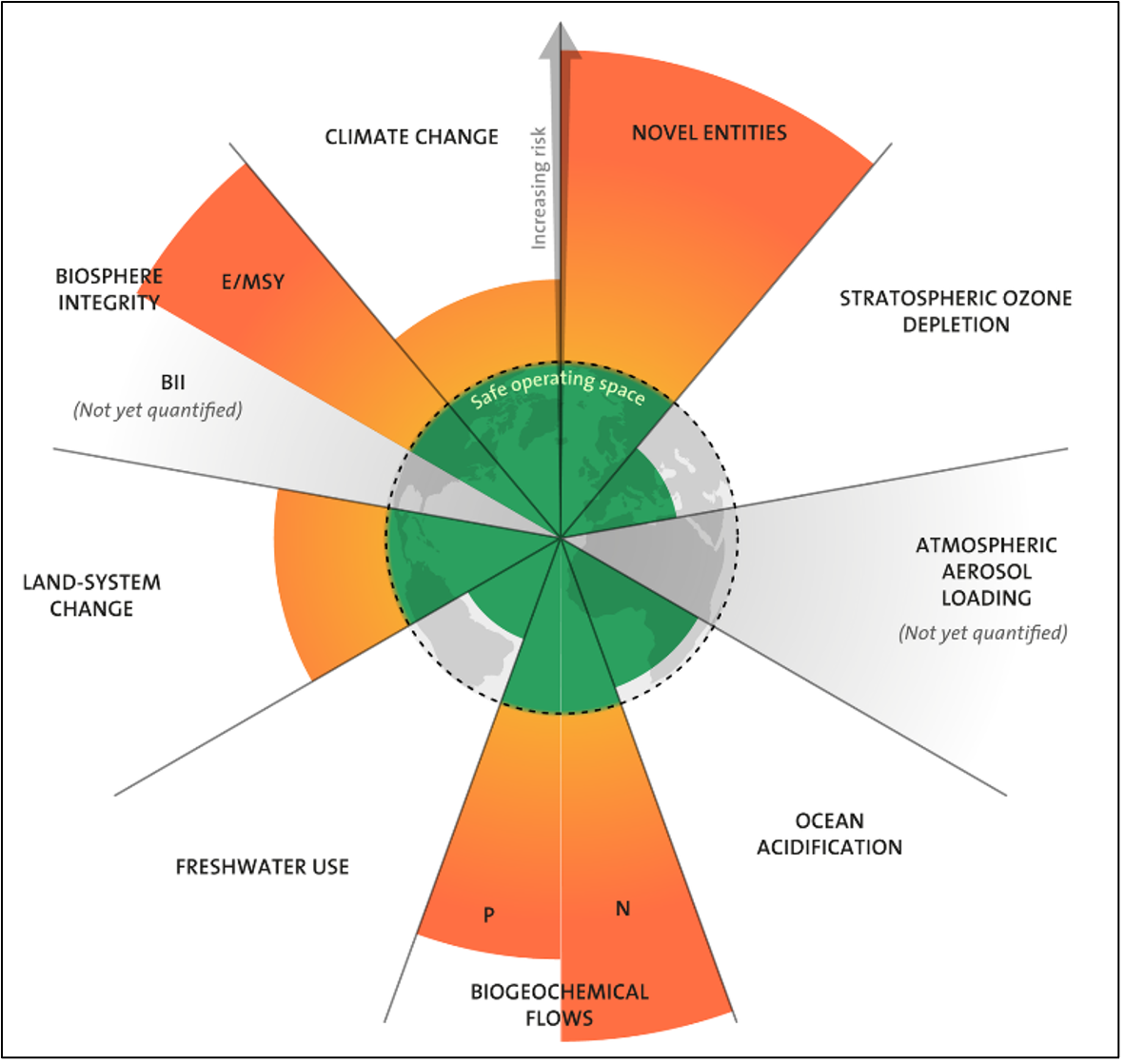
Five of Nine Planetary Boundaries Have Now Been Crossed

This month, researchers from the Stockholm Environment Institute, University of Gothenburg, University of Reading, Stockholm Resilience Centre, Stockholm University, University of Toronto, Technical University of Denmark and ETH Zurich assessed the impact of  synthetic chemicals such as plastics on the stability of the Earth’s physical, chemical, and biological systems for the first time.

The nine planetary boundaries—which include climate change (i.e. greenhouse gas emissions and associated warming), the ozone layer, land-system change like deforestation or desertification, biosphere integrity (i.e. biodiversity loss), and freshwater use—were first identified in 2009 by a team of 28 international researchers. These nine boundaries are representative of the Earth system conditions—including land, ocean, and atmospheric processes as well as naturally occurring cycles like the carbon cycle and their many interactions—that have remained relatively stable over the course of the Holocene era (i.e. the last 10,000 years or so). Crossing any these boundaries increases the risk of abrupt and/or irreversible environmental changes (often called “tipping points”) like the melting of ice sheets or coral reef die off. In 2009, the researchers determined that three of the nine boundaries had been crossed—climate change, biodiversity loss, and biogeochemical flows (nitrogen and phosphorous, which are more commonly occurring than they would be naturally, largely because of fertilizer application). In 2015, the research was updated showing that four of the nine boundaries had been crossed—with land-system change added to the list.

Now, in 2022, researchers were finally able to quantify the impact of synthetic chemicals like plastics on Earth’s systems (called the “novel entities” boundary) and determined that this boundary, too, has been exceeded—five of nine planetary boundaries have been crossed (and one—atmospheric aerosol loading—has yet to be quantified). The researchers determined that chemical production has increased by a factor of 50 since 1950, and is anticipated to triple between now and 2050. Plastic production increased by nearly 80 percent between 2000 and 2015 alone. This drastic uptick in synthetic chemicals entering the environment outpaces our ability to understand and predict their risks—only a “tiny fraction” of the approximately 350,000 synthetic chemicals created to date have been analyzed to determine their health and safety risks. However, we do know that the risks of many synthetic chemicals are long-lasting and include increasing pollution, harming biodiversity and altering biogeochemical cycles (the processes by which essential chemical elements—like carbon, nitrogen or oxygen—are circulated within and among ecosystems).

Amid mounting evidence of the global scale and severity of chemical pollution, there are growing calls for governmental action: In 2021, more than 1,800 scientists from across the globe signed an open letter asking for the creation of a science-policy panel—similar to the Intergovernmental Panel on Climate Change (IPCC)—to address chemical pollution. Negotiations around a global treaty to combat plastic pollution are set to launch next month at the U.N. Environment Assembly. (In November 2021, the U.S. indicated it would support such a treaty.) If these negotiations are as successful as those that established the Montreal Protocol for hydrofluorocarbons from aerosols and effectively saved the ozone layer—there is reason for hope.

Bryndis Woods
Senior Researcher


This is a part of the AEC Blog series

tags: Bryndis Woods
Wednesday 01.26.22
Posted by Liz Stanton
 

An Update on Building Electrification in Boston

Boston’s pledge to become a carbon free city by 2050 will rely on significant emission reductions from buildings—the city’s largest source of greenhouse gas emissions—where utility gas, fuel oil, and electricity together account for almost 70 percent of total emissions. Research has supported electrification (the transition away from fossil fuels in favor of electric heating and cooling) as a critical step for building emission reductions, and although the city has begun to address this sector with a transition plan for all large buildings (>=35,000 square feet), there is no explicit plan for building electrification. Rather, Boston’s Climate Action Plan (CAP) calls for emission reductions from retrofitting and renewable energy investments including biofuels and hydrogen.


In July of 2021, Boston’s Air Pollution Control Commission passed a series of amendments to the Building Energy Reporting and Disclosure Ordinance (BERDO) setting the CAP’s decarbonization plan into motion. These amendments allow the city to track emissions from large buildings, which make up nearly half of the city’s total emissions, while also investing in equitable clean energy technology that prioritizes underserved communities. Moving forward, the city will use data collected from the BERDO amendments to develop a decarbonization program, meaning that Boston’s building decarbonization strategy is dependent on their findings in the coming years.

Large buildings are the focus of the city’s decarbonization strategy because of their disproportionate contribution to the city’s emissions, but research on small building electrification could serve as a promising example for Boston’s strategy for all buildings moving forward. Rocky Mountain Institute released an analysis on new single-family homes in Boston in which they compare the costs of all-electric versus mixed-fuel appliances and heating in new construction projects. They found an average Boston home could save nearly $1,600 in utility bills and 51 tons of carbon dioxide emissions over a 15-year period.


Electrification is an effective and affordable decarbonization strategy. Building electrification is not currently being emphasized by Boston city planners despite research that supports its cost effectiveness but a least-cost decarbonization plan for Boston requires this cost-effect option.

Eliandro Tavares
Assistant Researcher


This is a part of the AEC Blog series

tags: Eliandro Tavares
Friday 01.21.22
Posted by Liz Stanton
 

Hidden Cost of PACE Lending for Energy Efficiency Improvements

It can be hard to afford the up-front cost of green investments such as solar panels, efficient heating and cooling equipment, or energy-efficient roofs—even when these investments are guaranteed to pay for themselves in a few years. The traditional way to fund such investments is through taking out loans or (if you are a government or business) issuing bonds, but homeowners, small business owners, and local governments are increasingly debt-laden and cash-strapped, leading them to seek new sources of financing.

Property Assessed Clean Energy (PACE) financing is often advertised as a new way to get money up front for green energy investments—without down payments, without monthly payments, without a good credit score, and without increasing government spending. To many, this sounds like a good deal: Since their invention around 2010, PACE programs are now in use in 22 states and legal in 37 states, and total investment in U.S. PACE projects increased from around $3 billion in 2016 to $8 billion in 2019.

But there’s a catch: In exchange for PACE financing, the lender gets a "priority lien" on the borrower's home or business. A priority lien is similar to a mortgage, except that payments are made as increased property taxes (which are paid yearly, so technically there are no monthly payments). That means that missing a PACE payment is legally akin to not paying one's property taxes, and one's home can be seized for even a single missed payment, depending on local law. In addition, PACE financing is substantially more expensive than traditional financing, making nonpayment more likely: PACE interest rates are 2 to 4 percent higher than a standard mortgage, plus additional "administrative fees" of 4 percent  or more. Furthermore, while in principle PACE projects are supposed to pay for themselves through energy savings, in practice they often do not; PACE regulations do not include oversight mechanisms to ensure that the promised energy savings materialize, or even that the green energy technology actually functions.

Whether or not the borrower sees savings from their PACE project, they must pay the costs: "Priority" in PACE’s priority liens means that repayment will be extracted from the borrower with precedence over virtually every other financial obligation except property taxes, including mortgage payments, utility bills, and car loan payments. So, missing payments on even a minor home improvement project funded by PACE entitles your lender to foreclose on your home even if you have a mortgage with another institution, and even if you own your home outright. Indeed, advertising materials for PACE lenders tout the certainty of being repaid, guaranteed by the right to seize a debtor's home, as one of the primary selling points of PACE liens.

While some PACE borrowers may be fully aware of the unusually high interest rate, the administrative fees, and the fact that their home is at stake, some borrowers are not, leading to financial catastrophe. In the absence of national oversight or systematic data collection, the extent of this problem is difficult to estimate. However, a joint study by ProPublica with the St. Louis Post-Dispatch and The Kansas City Star of 2,700 PACE loans in Missouri found that 100 PACE loans (3.4 percent) had at least two years of missed payments, leaving homeowners in danger of foreclosure. For comparison, the St. Louis foreclosure rate among all residential properties was far lower, 0.43 percent in 2019. In predominantly Black neighborhoods, 28 percent of PACE borrowers were at least one year behind in payments, compared to 4 percent in predominantly white neighborhoods, indicating that PACE lending may be exacerbating racial wealth disparities.

The National Consumer Law Center (NCLC) writes that "legal services agencies throughout California have been overrun with complaints related to PACE, including fraud, forgery, identity theft, price gouging, undisclosed costs and fees, and unpermitted or uncompleted work." NCLC has recorded over 40 cases where borrowers unexpectedly lost tens or hundreds of thousands of dollars, and sometimes lost their homes, from what were represented as guaranteed money-saving investments: cases where construction contractors and lenders aggressively pursued PACE contracts with elderly people (including three diagnosed with dementia) and with non-English speakers (who in some cases signed contracts in English without translation); cases where lenders' signatures were forged; cases where the terms of the lien were misrepresented, or where construction costs were thousands of dollars higher than those agreed upon, or where costs exceeded savings by tens and in some cases hundreds of thousands of dollars; and cases where construction was shoddy, incomplete, or damaging to the home. In an ongoing series, the LA Times is investigating numerous possible PACE abuses that have left families in financial ruin.

Regulators are beginning to take note. Los Angeles County recently shut down its PACE program, saying that the program could not ensure "sufficient protection for all consumers." Missouri and California both added greater consumer protections and oversight to their PACE programs in 2021. It remains to be seen whether other states follow suit, and whether these reforms lead to better outcomes for people hoping to make green investments.

Gabriel Lewis
Research Assistant


This is a part of the AEC Blog series

tags: Gabriel Lewis
Wednesday 01.12.22
Posted by Liz Stanton
 

Integrating Energy and Environment into Biden’s Infrastructure Plan

In March 2021, AEC published a blog titled What is missing from Biden’s Climate Plan?, which focused on a $2 trillion plan to tackle climate change. The Administration’s initial commitment while campaigning was to leverage $1.7 trillion over the next ten years into climate and environmental justice. In November 2021, President Biden passed a major $1.2 trillion infrastructure bill into law (originally the $2.25 trillion American Jobs Plan). However, a second proposal, known as the Build Back Better bill invests an additional $1.75 trillion into more sectors, including environment and climate. The Bill was passed by the House of Representatives but remains to be voted on by the Senate; the Democrats’ hope to pass it before the end of December. While the American Jobs Plan focused on improving infrastructure at large—like roads, bridges, airports, and water systems—each component can integrate clean energy and decarbonization strategies, beyond what the Build Back Better Bill is proposing.

Biden’s infrastructure bills, along with his general federal policy plan, has had an emphasis on environmental justice.  A press release from the White House emphasized that President Biden was committed to boosting clean energy jobs in order to strengthen resilience and advance environmental justice as a part of his two-part plan. In additional, President Biden signed an executive order his first two weeks into office highlighting the importance of incorporating environmental justice into the work of all agencies, and more recently, in July 2021, the administration announced Justice40, a government-wide initiative to bring clean energy investment to environmental justice communities.

While the American Jobs Plan, now law, does not specifically call upon Justice40, the law integrates environmental justice principles into its energy specific goals. The law dedicates $100 billion towards renovating the electric grid, though cost estimates range closer to $400-$500 billion. Components include building a more resilient electric transmission system, generating clean energy jobs (especially within underserved communities), and fully decommissioning orphan oil and gas wells along with abandoned coal mines. Non-explicit electric grid components that still integrate energy and environment include a push to retrofit homes, commercial and federal buildings, and veterans’ hospitals to make them more energy efficient.

In contrast, the Build Back Better Plan, yet to be made law, mentions Justice40 and has a more specific focus on the energy sector. The plan proposes a $440.2 billion investment into environment and climate, and includes a massive push for renewable electricity tax credits. Other components include domestic building of clean energy technology (citing specifically wind turbine blades, solar panels, and electric cars) in order to stimulate jobs, a Clean Energy and Sustainability Accelerator with a focus on disadvantaged communities (under the Justice40 initiative), and investment in coastal restoration, forest management, and soil conservation.

In April 2021 the administration announced a target 50-52 percent reduction from 2005 levels in net greenhouse gas pollution for the entire country by 2030. Getting there will require actions like the American Jobs Plan and Build Back Better Plan, with integrations of the Justice40 initiative across the board, to ensure a sustainable, just, and green transition.

Myisha Majumder
Research Assistant


This is a part of the AEC Blog series

tags: Myisha Majumder
Thursday 12.16.21
Posted by Guest User
 

Deep Water Cooling Systems Provide an Alternative to Traditional Air Conditioning

With climate change leading to record summer temperatures, access to cooled spaces can mean the difference between life and death for many. However, air-conditioning can be prohibitively expensive and is energy—and greenhouse-gas emission—intensive. As of 2018, cooling systems accounted for roughly 10 percent of global energy consumption and 12 percent of residential energy expenditure in the United States. As an alternative, some areas have invested in deep water cooling systems (DWCS) as a low energy way of keeping buildings cool. DWCS use sea or lake water as a coolant rather than relying on electric-powered AC systems. DWCS work by running a closed loop of water through the buildings being cooled. The water chills the buildings and absorbs excess heat. The water then is cycled through a cooling station where it is rechilled by sea/lake water that has been pumped to the surface. The sea/lake water is either returned to the sea/lake or continues on to be processed in desalination centers or drinking water treatment facilities.

Toronto is currently home to the world’s largest deep lake water cooling system—the largest deep seawater cooling system has just launched in Tahiti. Launched in 2004, Toronto now used DWCS to cool over 100 buildings in the downtown area, including Toronto General Hospital, City Hall, and the Scotiabank Arena. Due to its popularity, the system has nearly reached capacity and Enwave, the company that runs it, has committed to a (CAN) $100 million expansion, adding a fourth pipe to the three that already pump water in from Lake Ontario. Enwave estimates that the system saves 90,000 mega-watt hours of electricity annually—enough to power a 25,000-person town—and 220 million gallons of water annually when compared to traditional cooling systems that rely on evaporation to dissipate heat.

DWCS save energy and reduce emissions, but they are not without their drawbacks. The initial cost of installing a DWCS system is high. Toronto’s system initially cost Enwave (CAN) $170 million to install and the Honolulu Seawater Air Conditioning LLC, after spending 16 years and $25 million obtaining regulatory approval, recently ended their DWCS plans due to an increase in estimated construction costs from $275 million to $400 million. Location and geography are also critical. The body of water used needs to be deep enough to ensure a permanently cold bottom level. Much of the ocean shelf along eastern United States, for example, is too shallow for deep water cooling. The amount of water that can be safely withdrawn for cooling also varies. While large bodies of water such as the great lakes and the ocean are effectively limitless as a cooling resource, smaller water bodies can only have so much water withdrawn before the returning warmed water effects the overall temperature. In the locations where it is feasible, however, deep water cooling can serve as an energy efficient way to cool a single large building, college campus, or a whole downtown area.

Claire Marie James

Research Assistant


This is a part of the AEC Blog series

tags: Claire Marie James
Thursday 12.09.21
Posted by Guest User
 

Climate Change and the Forced Relocation of Native American Nations

Once again, many Native Americans find themselves facing the loss of land and home. In 1889, President Grover Cleveland issued an executive order that set the stage for an almost impossible situation facing a Native American community in Washington State today. President Cleveland’s order confined the Quileute Nation to one-square mile of land on the tip of the Olympic Peninsula. The Quileute traditionally used this portion of their land as a fishing community for part of the year due to its tendency to flood. Confined to this tiny patch of land, the Quileute community faced frequent flooding. Today, due to rising sea levels and intensifying storms caused by climate change, the Tribe increasingly experiences power outages, flooding, and storm damage, which prevent them from using the one road that connects the community with the rest of the world. Nations like the Quileute face a difficult choice: remain on their home land and suffer from the effects of climate change, or leave their ancestral land to find refuge further inland. Unfortunately, the Quileute Nation is not the only Native Nation in this position.

In an October 2021 article in the journal Science, a team of researchers examined the forced relocation of hundreds of Native American Tribes in the United States by European and American settlers and the continuing impacts of their relocation on the Tribes’ environmental and economic conditions today. More than two-fifths of the 380 Tribes that were forcibly relocated have no federal or state-recognized land base, while Tribes with land bases saw their land size reduced by up to 99 percent after relocation. Furthermore, relocated tribes often were moved to land with less hospitable climates that now expose these Tribes to higher climate change risks, increasingly severe environmental hazards, and disadvantageous economic conditions. These results further confirm the deep interconnection between environmental justice, racial justice, and economic justice.

The increasing frequency and severity of environmental disasters has also amplified economic inequality for Native Nations. According to Northwestern University’s Institute for Policy Research, approximately one in three Native Americans live in poverty, with a median income of approximately $23,000. The Institute also points out that, even though more Native Americans are receiving a high school and college degree than ever, wage gaps are increasing and employment levels are dropping when compared to white populations in the same areas. The effects of climate change are exacerbating this economic inequality by prompting many to leave their Tribes for cities with more economic opportunities, which means Tribes often face a shrinking tax base. For example, the Yupik of Newtok, Alaska, have been forced to relocate to nearby Mertarvik due to sea level rise, increased flooding from the Ninglick River, and the erosion and shifting buildings caused by melting permafrost. Likewise, two Tribes on Isle de Jean Charles in southern Louisiana, the Biloxi-Chitimacha-Choctaw and the United Houma Nation, are considered the United States’ first climate refugees as of 2016 when they were awarded a $48 million federal grant to relocate their communities. Isle de Jean Charles is sinking, with flooding becoming more frequent, and nine-tenths of the island’s land mass lost to rising sea levels since 1955. 

Centuries of systemic racism and widespread inaction on climate mitigation have left Native Nations vulnerable to the increasingly severe effects of climate change. The existing challenges facing Native Nations have been amplified by the effects of climate change, such as rising sea levels and intensifying storms. The past is rarely ever left in the past; it continues to shape our present world and inform our future.

Levi Bevis

Communications Assistant


This is a part of the AEC Blog series

tags: Levi Bevis
Tuesday 11.30.21
Posted by Guest User
 

Pipelines Threaten Indigenous Safety, Land, and Sovereignty

As of 2019, 26,545 miles of oil and gas pipelines were proposed or planned, and another 9,542 were already under construction in North America. Countless more existing pipelines leak pollutants into the air and soil every day. Not only does further oil and gas development directly interfere with the policies and investments necessary to tackle climate change, the pipelines cross Indigenous lands; many cross lands whose use is governed by treaties.

In Minnesota, Enbridge’s Line 3 faced tremendous public pushback—countless demonstrations against the pipeline were held, defending water and land resources that are critical for many Indigenous communities. This Enbridge replacement project cuts through an area of northern Minnesota on and near treaty lands belonging to the Ojibwe and Anishinaabe First Nations, but no analysis (required under the Clean Water Act, the Environmental Policy Act, and tribal treaty rights) has been done to examine the impacts of the project. The Ojibwe and Anishinaabe signed treaties with the United States government that relinquished ownership of 10 million acres of northern Minnesota lake country in 1855. However, the Tribes retained the right to hunt, fish, gather, and hold ceremonies on the land. In only the second “rights of nature” case ever brought to trial, the White Earth Nation of Ojibwe sued the Minnesota Department of Natural Resources on behalf of wild rice; the case argues that nature itself has the right to exist and flourish and that the Minnesota Department of Natural Resources violated the rights of manoomin (wild rice), which grows in lakes. The plaintiff’s case described allowing Enbridge to pump up to 5 billion gallons of groundwater as an egregious decision on the part of the State.

The current Line 3 pipeline caused the United States’ largest inland oil spill in 1991; in total, 33 spills have occurred on Line 3 since 1968, totaling more than 1 million gallons of spilled oil. With the new line crisscrossing several waterways, including the Mississippi River, 290 interconnected streams and rivers are jeopardized.

In addition, the sudden influx of pipeline workers into predominantly poor and rural Indigenous communities coincides with increases in violence, illicit drugs, and sex trafficking. Multiple human trafficking “sting operations” have resulted in arrests including at least four Line 3 workers in 2021 alone. A crisis center for Northwest Minnesota had responded to over 40 reports of harassment against women and girls by Line 3 workers as of June 2021; construction began in December 2020. Before the Line 3 project was launched, Minnesota’s Public Utilities Commission acknowledged that “cash rich” workers on projects increases the risk of sex trafficking and yet still permitted the project to go forward. Enbridge reimbursed a local Violence Intervention Project for the expense of transportation and hotel costs to get the victims to safety after three assaults by Line 3 workers. But the influx of pipeline workers also crowds local hotels and limits safe rooms that could be used to house women facing violence. Tribal courts are limited by Federal law in their ability to protect women from rapists, even when there is sufficient evidence to result in a conviction: the courts cannot pass sentences greater than five years. Meanwhile, the U.S. Justice Department has only prosecuted 35 percent of rapes reported on Tribal lands. Of the 5,712 reported cases of missing and murdered Indigenous women nationwide in 2016, just 116 were logged in Justice Department databases.

By contrast, law enforcement’s response to the protests against the pipeline have emphasized punitive action. In Minnesota the Public Utilities Commission has required Enbridge to reimburse police for responding to protests, giving local police a perverse incentive to arrest protestors demonstrating against the pipeline. As of October 2021, $2.4 million had been paid by Enbridge to U.S. police and records indicate the company met frequently with police to discuss ongoing gatherings and protests. Reimbursements were requested for batons, tear gas, and flash-bang devices. Moreover, information on police activities has been classified as “security information,” leaving it ineligible for public records requests, making these reimbursements all the more difficult to track.

Indigenous communities opposing existing and proposed gas and oil pipelines emphasize their lack of control over their own lands, including: treaty rights to natural resources, the distribution of benefits and costs of development on their land, and their own safety and autonomy. Winning the cancellation of new pipeline projects is an important first step. In a previous post, we also highlighted the importance of Tribal access to capital and financing so that they can invest in renewable alternatives to oil and gas. The ability to own the new resources if they so choose is crucial to ensuring Tribes can access the benefits of investment in generation and efficiency as they strive for a future without climate change and for the protection of their lands. And that ownership may also be key to preventing fossil-fuel-intensive investment projects— particularly pipelines and the violence they bring—from harming other indigenous communities in the future.

Liz Stanton, PhD.

Director and Senior Economist

Chirag Lala

Researcher


This is a part of the AEC Blog series

tags: Liz Stanton, Chirag Lala
Thursday 11.11.21
Posted by Guest User
 

Exxon given negative rating on racial justice actions

A recent report by corporate accountability advocacy group As You Sow rated Exxon Mobil last out of all S&P 500 companies on measures of racial justice. The San Antonio based company received an overall score of negative 23 percent out of a possible 100 percent:

  • Zero percent for Racial Justice Statement, Corporate Responsibility, DEI (Diversity, Equity, and Inclusion) Department, and External Actions, meaning they took no actions in any of those categories.

  • 7 percent on its disclosure of Diversity, Equity, and Inclusion data, earning 2 out of a possible 27 points within that category.

Within the category of Environmental justice:

  • Zero for Acknowledgement of Environmental Justice.

  • Negative 5 for Abides by Environmental Regulations.

  • Negative 6 for Environmental Fines and Penalties.

  • Negative 2 for Adverse Effects to BIPOC Communities, for a total score of negative 13 out of 16, or negative 81 percent.

As You Sow’s report listed Exxon as having over 100 environmental regulation violations since 2015 and found that, more generally, companies with a low environmental score were often repeat offenders. As of March 2021, a federal judge ordered Exxon to pay a $14.25 million fine for 16,386 violations of the federal Clean Air Act between 2005 and 2013—this averages out to approximately 5 to 6 violations per day at less than $900 per violation—in their flagship Baytown, Texas refinery alone.

Residents living near Exxon’s Beaumont, Texas refinery face elevated health risks likely due to the 135 toxic chemicals, including carcinogens, released in the refining process. The risk of cancer for those living in this historically black neighborhood is 54 in a million, much higher than the zero-to-one in a million national average. The local community suffers from elevated health issues related to their elevated exposure to pollutants. The Beaumont refinery is the third largest polluter in the United States. The top two polluters are Exxon’s Baton Rouge and Baytown facilities, respectively. Similar to Beaumont, the Baton Rouge refinery is located in a predominantly black neighborhood that suffers from elevated health risks.

Overall, the energy sector had the lowest average score, 3 percent, compared to Consumer Staples at 21 percent and Materials at 9 percent. By defining specific racial justice actions, As You Sow provides companies with a potential road map for improving their social impact and consumers and stakeholders with information on and a methodology for assessing company actions.

Claire Marie James

Research Assistant


This is a part of the AEC Blog series

tags: Claire Marie James
Monday 10.25.21
Posted by Guest User
 
Newer / Older